

Affiliate Disclosure: StandingSole may earn a commission if you purchase through links on this page, at no extra cost to you. This does not affect our editorial guidance.
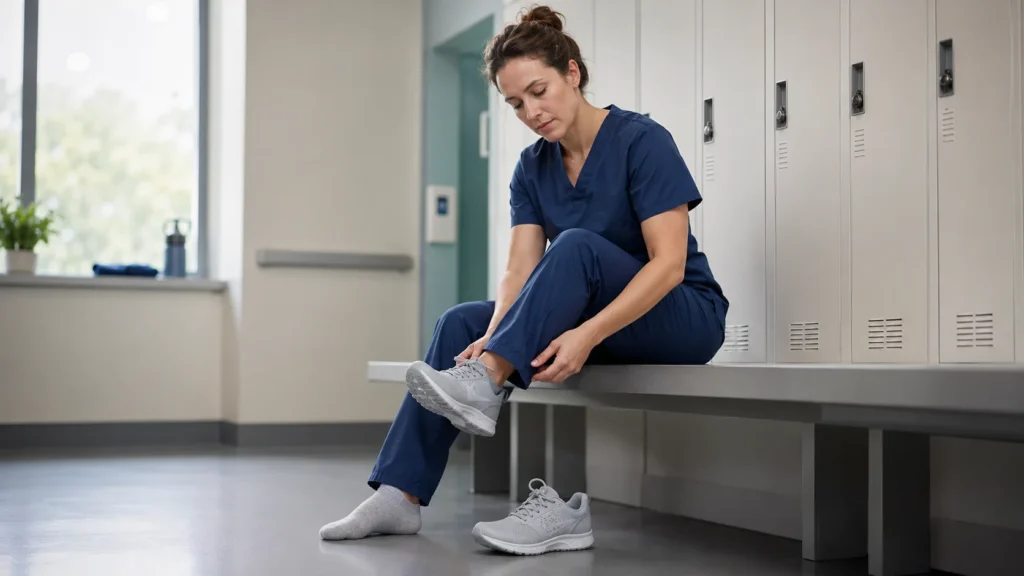
You tried the shoes on, and they felt comfortable. Maybe a coworker recommended them. Maybe you saw nurses talking about them online. At first, everything felt fine.
Then a few hours into your shift, your toes, arches, heels, or whole feet started hurting.
You are not the only one dealing with this. Nurses, nursing students, CNAs, and healthcare workers often talk about shoes that feel good during a short try-on but do not feel the same during a real shift. The shoes are not always cheap or poorly made. The problem is that short-term comfort and long-shift comfort are not the same thing.
This guide explains why nursing shoes can feel comfortable at first but hurt later. It will help you understand what part of the shoe may be causing the problem, what to check before keeping another pair, and when footwear troubleshooting is not enough.
Quick Answer: Why Do Nursing Shoes Hurt After a Few Hours?
Nursing shoes can feel fine at first but hurt later because the cushioning may feel soft at first, your toes may need more room later in the shift, the shoe may be too narrow, the arch support may not match your foot, socks or insoles may change the fit, the heel may slip, or the shoe may not match your shift type, floor conditions, or clinical dress code.
The fix is not always switching brands. A better first step is understanding which part of the shoe is failing and why.
First Hour Comfort Is Not the Same as Long Shift Comfort
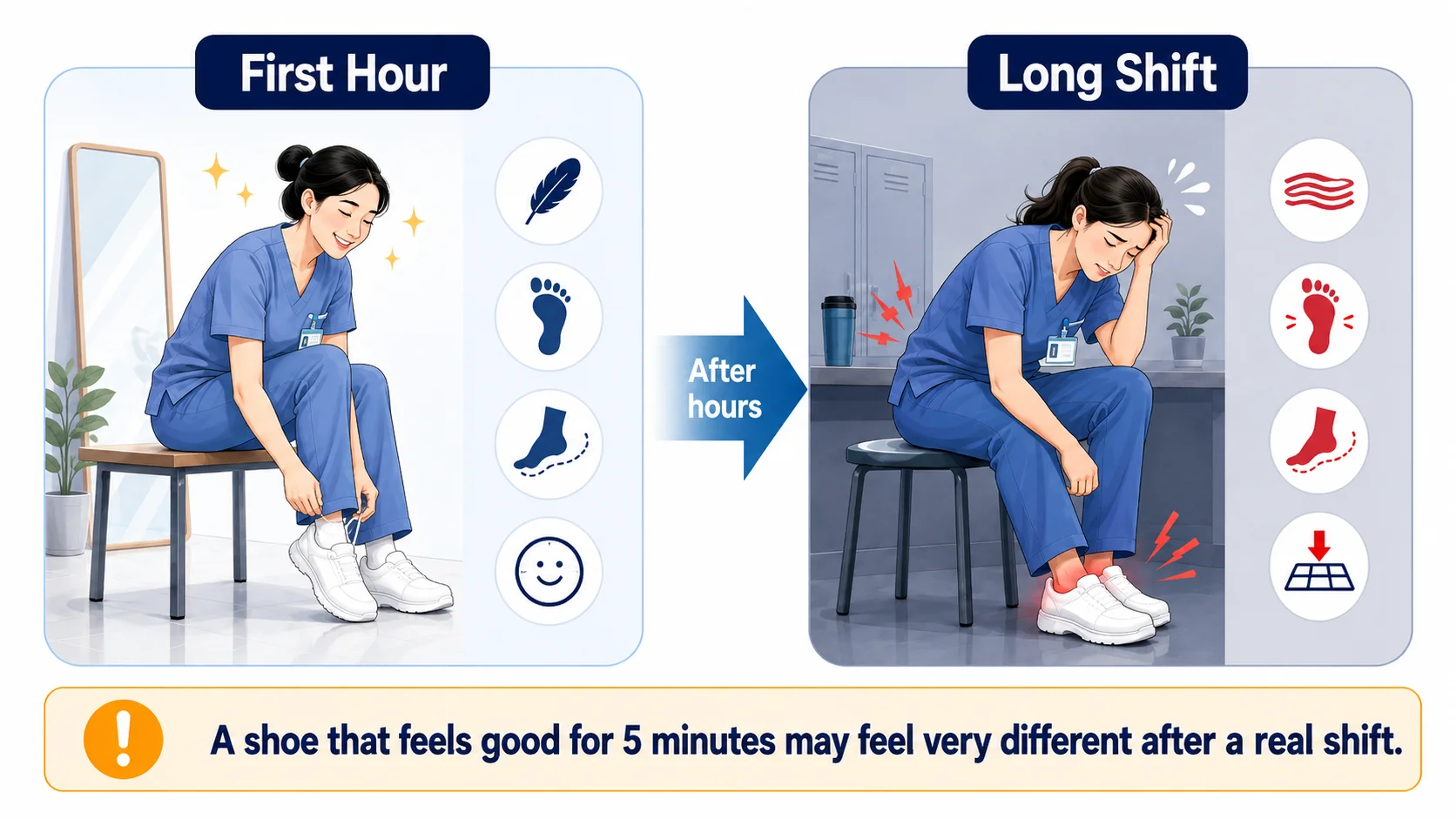
Trying on nursing shoes for a few minutes is very different from wearing them through a long shift.
During a short try-on, you may only walk a few steps. The cushioning feels soft. The upper feels comfortable. Nothing has rubbed yet. That short experience can be helpful, but it does not fully show how the shoe will feel after hours on hard floors.
During a nursing shift, the shoe faces different demands:
- You may stand and walk for long stretches.
- You may move quickly between rooms, hallways, or patient areas.
- Your feet may feel tighter inside the shoe as the shift goes on.
- Cushioning and support can feel different after repeated standing and walking.
- Small fit issues, such as a narrow toe box or slight heel slip, can become more noticeable later.
That is why a shoe can feel good at first and still become uncomfortable during a real shift. This is not always a mistake in your judgment. It is a limitation of judging long-shift footwear from a short try-on.
7 Reasons Nursing Shoes Start Hurting Later
1. The Cushioning Feels Soft but May Not Stay Supportive
Soft cushioning can feel great when you first put the shoe on. But softness alone does not always mean the shoe will feel supportive during a long shift.
Cushioning helps soften the feel under your feet. Support helps the shoe feel stable and structured while you stand, walk, turn, and move around the floor. A shoe can feel soft but still feel unstable, too flexible, or unsupportive after several hours.
This is why the softest shoe is not automatically the best nursing shoe. Some nurses may prefer plush cushioning. Others may feel better in a shoe with firmer structure and more stability.
Before buying, check both questions:
- Does the shoe feel cushioned enough?
- Does the shoe also feel stable and supportive when you stand and walk?
A shoe that only feels soft at first may not solve the real long-shift problem.
2. Your Toes May Need More Room Later in the Shift
Toe pain is one of the most common footwear complaints for nurses and nursing students.
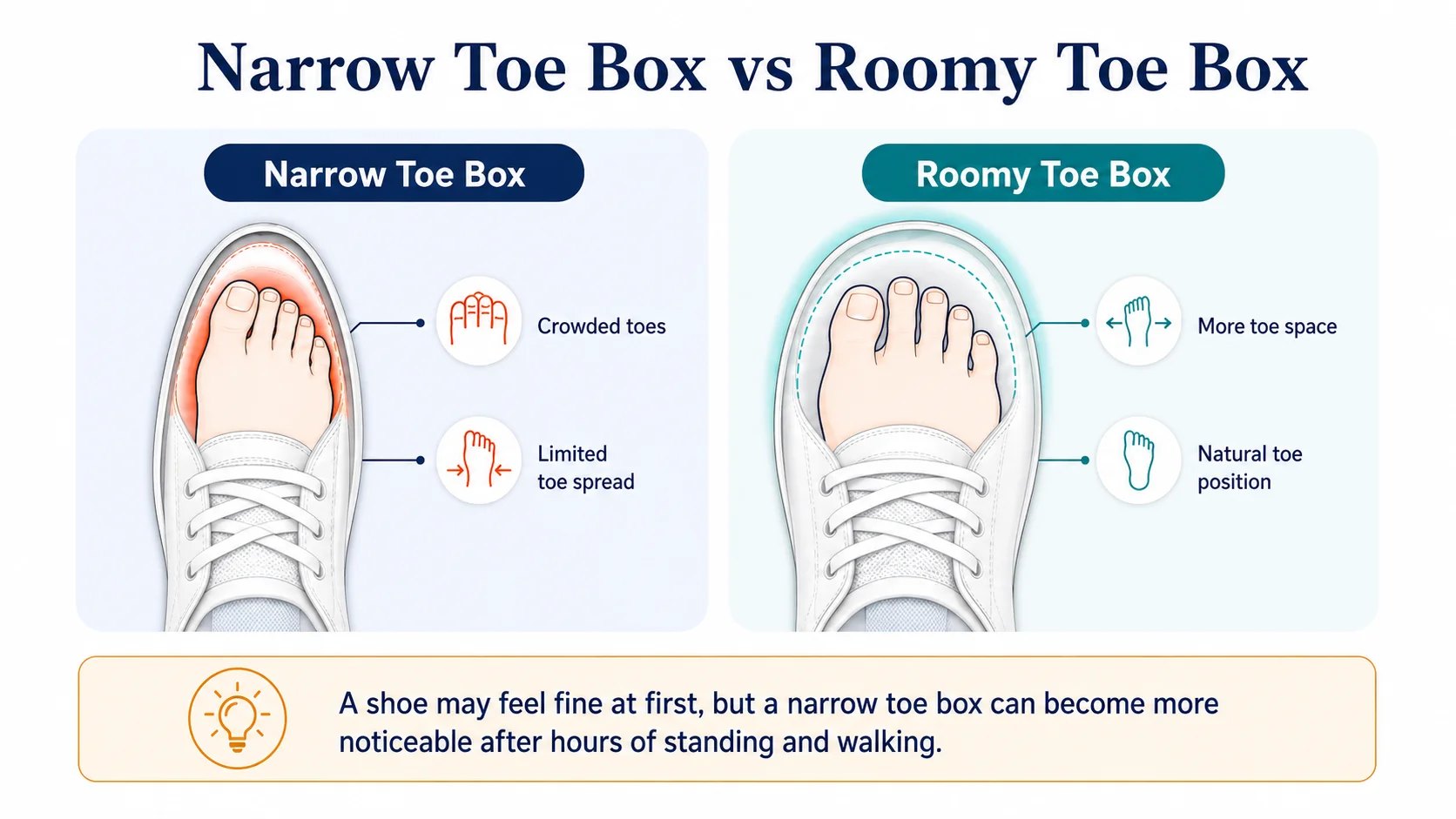
Your toes may feel fine during a short try-on, but later in the shift, the front of the shoe may start to feel tight. This can happen when the toe box is too narrow, too shallow, too stiff, or crowded by thicker socks or added insoles.
Signs that the toe box may be part of the problem include:
- Pressure on the big toe or pinky toe
- Toenail pressure
- Rubbing near the front or sides of the shoe
- Toes feeling cramped later in the shift
- The shoe feeling tighter after several hours than it did at first
This is not a diagnosis. It is a footwear fit clue. If your toes are the main area of discomfort, the toe box, width, and internal space are worth checking first.
3. The Shoe May Be Too Narrow, Even if the Length Feels Right
Length and width are not the same thing.
A shoe can be long enough from heel to toe but still too narrow across the forefoot or midfoot. This is one reason some nurses feel confused when they buy their usual size and still feel pressure during a shift.
Sizing up may help if the shoe is too short. But if the shoe is too narrow, sizing up may only add extra length without solving the width problem. It can also create heel slip because the shoe becomes longer than your foot needs.
Before sizing up, ask:
- Are my toes hitting the front of the shoe, or are they squeezed from the sides?
- Does the widest part of my foot match the widest part of the shoe?
- Does the shoe come in a true wide width?
- Is the toe box roomy, or is only the length bigger?
- Does my heel stay secure when I walk?
Some nurses need a true wide width. Others need a roomier toe box. Some may need both.
4. The Arch Support May Not Match Your Foot
Arch support is not one size fits all.
A shoe that works well for one nurse may not feel right for another nurse, even if both wear the same brand. The arch height, footbed shape, midsole firmness, and insole design can all change how the shoe feels during a long shift.
If your arches or the balls of your feet start bothering you later in the day, it may be worth checking:
- Whether the arch support feels too high, too low, or misplaced
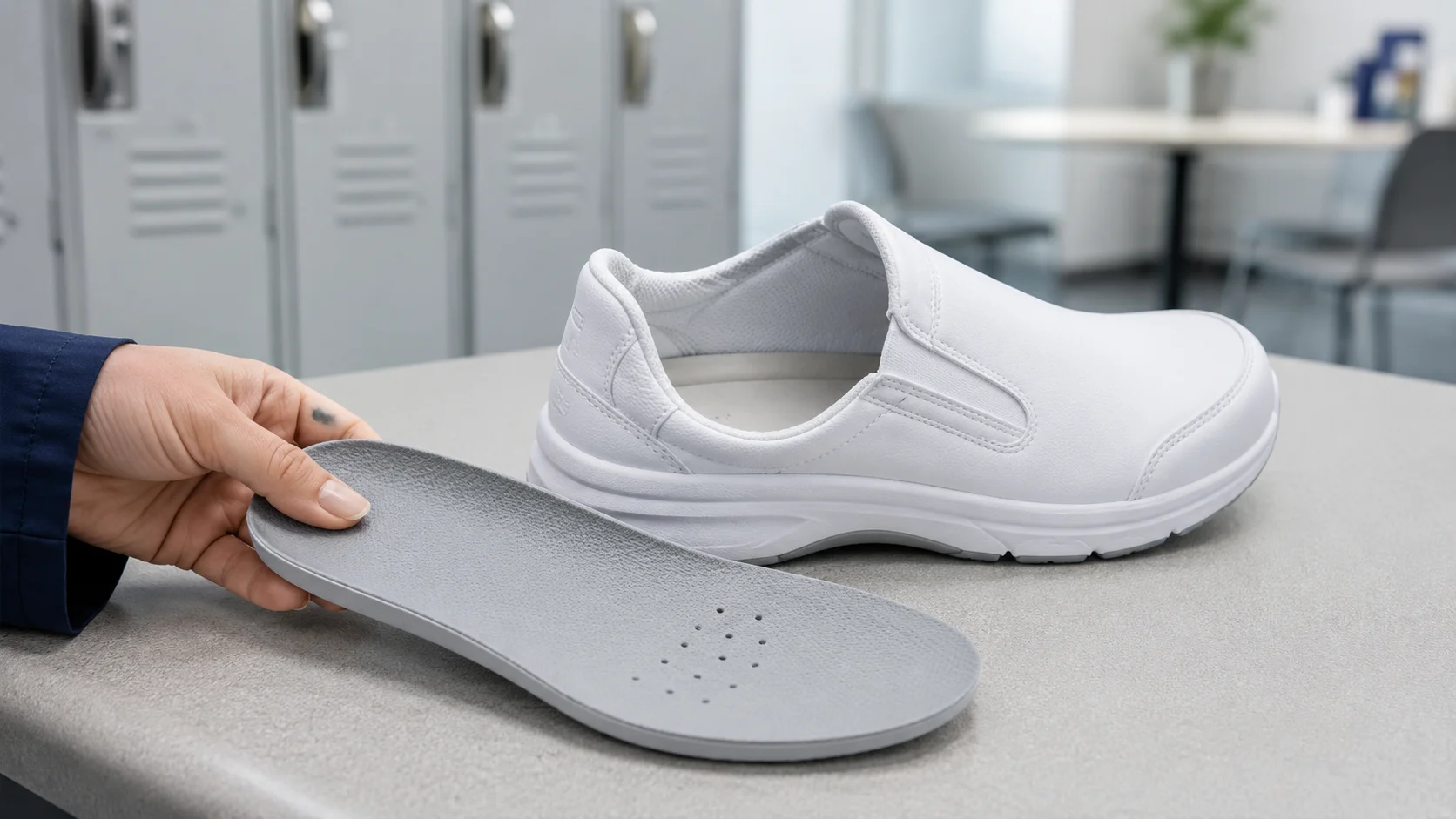
- Whether the shoe has a removable insole
- Whether your preferred insert or orthotic fits without crowding your foot
- Whether the shoe still feels stable after standing and walking
- Whether your socks change how the arch area feels
This is a footwear fit consideration, not medical advice. If arch or foot pain is persistent, worsening, or not improving with better fit, speak with a qualified healthcare professional.
5. The Heel Fit May Not Be Secure Enough
Heel slip is easy to miss during a short try-on. During a long shift, it can become a real comfort problem.
If your heel lifts slightly with each step, you may notice rubbing, instability, or a loose feeling. Some people also grip with their toes to keep the shoe in place, which can add fatigue over time.
Heel slip may happen when:
- The shoe is too long
- The heel area is too wide for your foot
- You sized up for toe room
- Added insoles changed the heel fit
- The shoe shape does not match your heel
Check heel fit while walking normally, not only while standing still. Your heel should feel secure without the back of the shoe digging into your skin.
6. Socks or Insoles Changed the Fit
Many nurses do not try shoes with the same socks they wear during a shift.
That can cause problems. Compression socks, thicker athletic socks, cushioned socks, orthotics, and added insoles can all reduce the space inside the shoe.
A shoe that feels fine with thin socks may feel tight with work socks. A shoe that fits well without an insole may feel crowded after adding one.
Before keeping a pair, try the shoes with:
- Your actual work socks
- Compression socks if you wear them
- Insoles or orthotics if you use them
- The same setup you plan to wear during clinicals or shifts
This simple step can prevent a lot of fit surprises later.
7. The Shoe May Be Worn Down or Wrong for Your Shift Type
A shoe that worked before may not always keep feeling the same.
Over time, cushioning and support may feel less responsive. The outsole may still look usable, but the inside of the shoe may no longer feel as supportive as it once did.
Your shift type also matters. A shoe that works for shorter clinical days may not feel the same during repeated 12-hour shifts. A shoe that works for a mostly standing role may feel different in a role with constant walking. A shoe that works in one unit may not match another unit’s floor conditions, fluid exposure, or dress-code rules.
Before blaming your feet, ask whether your work setting has changed, your shift length has increased, or your shoes are older than you realize.
Use Pain Location as a Shoe Feature Clue
Pain location should not be used as a medical diagnosis. But it can help you decide which shoe feature to check first.
| Where It Hurts Later in Your Shift | Shoe Feature Worth Checking | What to Look at Next |
|---|---|---|
| Toes | Toe box size, shoe width, length, sock thickness, insole space | Check whether you need more toe room or true wide width |
| Arches | Footbed shape, arch support height, removable insole, midsole stability | Compare cushioning and support, not just softness |
| Heels | Heel fit, heel counter, shoe length, heel slip | Check whether the shoe is too long or loose at the back |
| Ball of the foot | Forefoot width, toe box depth, shoe volume with socks or insoles | Check width and internal space |
| Whole foot | Shift length, shoe age, floor demands, overall support | Check whether the shoe matches your shift type |
Why Sizing Up Does Not Always Fix Nursing Shoe Pain
Sizing up is a common first response when shoes hurt. Sometimes it helps, but it does not solve every fit problem.
When you size up, you mainly add length. You do not always add enough width. If your shoe is tight across the forefoot or midfoot, a longer size may still feel narrow.
Sizing up can also create new issues:
- Heel slip
- Rubbing at the back of the foot
- Less stable walking
- Toes sliding forward
- More pressure at the front of the shoe
A better approach is to identify the actual fit problem.
Ask yourself:
- Is the shoe too short, or too narrow?
- Are my toes hitting the front, or squeezed from the sides?
- Does the shoe come in wide width?
- Does the heel slip when I walk?
- Does the shoe feel different with my work socks?
- Does an added insole make the shoe too tight?
If the shoe feels narrow, a true wide width may be more useful than a longer size.
What to Check Before Keeping Nursing Shoes for Long Shifts
Before committing to a new pair, especially before wearing them outside, work through this checklist.
Fit and Sizing
- Toe box has enough room for your toes without crowding.
- Width feels comfortable across the forefoot and midfoot.
- Heel stays secure while walking.
- Shoe does not feel tight with your actual work socks.
- Shoe still fits if you use insoles or orthotics.
- Your foot does not slide forward when walking.
Support and Cushioning
- Cushioning feels comfortable but not unstable.
- Arch area feels natural for your foot.
- Shoe feels secure while standing and walking.
- Midsole does not feel too soft or wobbly.
- Insole is removable if you plan to use your own insert.
Practical Work Features
- Outsole has appropriate grip for your workplace or clinical setting.
- Upper material is easy to clean if your school or workplace requires it.
- Shoe design matches your dress code.
- Return policy gives you enough time to check indoor fit.
- You tested the shoes indoors before wearing them outside, if the return policy requires that.
For Nursing Students
- Confirm shoe color requirements.
- Confirm closed-toe and closed-heel requirements.
- Check whether mesh is allowed.
- Check whether nonporous or nonpermeable material is required.
- Check rules about logos, socks, and shoe cleanliness.
Nursing Students: Clinical Rules Can Limit Comfortable Options
For nursing students, shoe choice is not only about comfort. Your shoes also need to meet your program’s clinical rules.
Some programs require white shoes. Some require closed-toe and closed-heel shoes. Some restrict mesh or require cleanable, nonpermeable, or nonporous materials.
For example, some nursing programs specify white clean shoes in good repair, closed-toe and closed-heel construction, and nonpermeable material. That is one program example, not a universal rule.
Your own program policy is what matters.
Before buying clinical shoes, check:
- Your nursing program handbook
- Clinical placement instructions
- Color requirements
- Material requirements
- Closed-toe and closed-heel rules
- Mesh restrictions
- Logo or branding rules
- Sock requirements
The most comfortable shoe you find may still be the wrong choice if it does not meet your school’s rules.
For a dedicated student-focused guide, read StandingSole’s article on white closed-toe clinical shoes for nursing students.
What About Slip Resistant Shoes?
Slip resistant shoes may be useful in healthcare settings, especially where floors can become wet or smooth. But no shoe can guarantee that you will not slip.
Slip risk depends on more than the shoe. Floor surface, spills, cleaning products, walking speed, and workplace conditions can all matter.
When checking slip resistance, ask:
- Does your workplace or school require slip resistant shoes?
- Does the outsole have tread designed for work floors?
- Is the shoe still comfortable and supportive for your shift?
- Does the shoe also meet color, material, and dress-code rules?
- Are you relying on the shoe label alone, or checking the full design?
If your employer or school has specific footwear requirements, follow those first.
When Foot Pain Is Not Just a Shoe Problem
This article is about footwear fit and buying decisions. It is not medical advice.
Shoes can be part of the comfort picture, but they are not the answer to every type of foot pain. A better fitting shoe may help some fit-related discomfort, but persistent or serious pain should not be ignored.
Consider speaking with a qualified healthcare professional if:
- Pain is severe
- Pain is getting worse
- Pain started after an injury
- Pain continues significantly after your shift
- You notice swelling, warmth, redness, or an open wound
- You have trouble walking or bearing weight
- You feel concerned that something more serious may be happening
No footwear guide should replace professional medical judgment.
Next Step: Choose Nursing Shoes by Shift Problem, Not Just Brand Name
Brand popularity does not guarantee that a shoe will work for your shift, your foot shape, or your program rules.
Instead of asking only, “Which brand is best?” ask better buying questions:
- How long are my shifts?
- Do I need more toe room?
- Do I need a true wide width?
- Does the arch support match my foot?
- Does the heel stay secure?
- Do my socks or insoles change the fit?
- Does my workplace require slip resistant shoes?
- Does my nursing program require white, closed-toe, closed-heel, or nonmesh shoes?
- Where does the shoe start hurting during the shift?
Before buying another pair, compare nursing shoes by shift length, width, support, toe box room, heel fit, and clinical requirements. Do not choose only by what is popular online or what works for someone else.
Frequently Asked Questions
Why do my nursing shoes hurt after a few hours?
Nursing shoes may hurt after a few hours because of fit, width, toe box space, arch support, heel slip, socks, insoles, or cushioning that feels soft at first but does not feel supportive later. The pain location can help you decide which shoe feature to check first.
Can shoes feel comfortable in the store but hurt during a 12-hour shift?
Yes. A store try-on only shows short-term comfort. A nursing shift adds hours of standing, walking, turning, and hard floor contact. Those conditions can reveal fit or support problems that were not obvious at first.
Should I size up if my nursing shoes hurt?
Not always. Sizing up adds length, but it may not add enough width. If your forefoot or toes feel squeezed from the sides, a true wide width or roomier toe box may be a better thing to check. Sizing up can also cause heel slip.
Why do my toes hurt in nursing shoes?
Toe pain may be related to a narrow toe box, shallow toe area, stiff upper, thick socks, added insoles, or not enough width. If toe pain is severe or persistent, speak with a qualified professional.
Are softer nursing shoes always better for long shifts?
No. Soft cushioning can feel good early, but some nurses may also need structure and stability. For long shifts, the better goal is a balance of cushioning, support, fit, and secure movement.
Should nursing shoes have removable insoles?
A removable insole can be useful if you use orthotics or want more flexibility inside the shoe. But it is not a fix for a poorly fitting shoe. The shoe still needs enough room after any insert is added.
What should nursing students check before buying clinical shoes?
Nursing students should check their program’s rules for color, closed toe, closed heel, mesh, material, logos, socks, and cleanability. Rules vary by program, so the safest step is checking the written policy before buying.
Do slip resistant shoes guarantee safety?
No. Slip resistant shoes may help with traction, but they do not guarantee that you will not slip. Floor conditions, spills, movement, and workplace rules still matter.
Sources Consulted
This guide was prepared by reviewing public medical guidance, workplace safety guidance, nursing student dress-code examples, Google Search Central guidance, and reader discussions about nurse footwear comfort. Reddit discussions were used only as background context for common reader concerns, not as medical or safety authority.
Cleveland Clinic: Edema
Reviewed for general background on swelling and fluid buildup.
Mayo Clinic: Foot Pain
Reviewed for guidance on when foot pain may need medical attention.
Mayo Clinic: Metatarsalgia
Reviewed for footwear-related context involving shoes that are too tight or too loose.
OSHA: Foot Protection Standard
Reviewed for workplace footwear safety context.
Bellin College: Undergraduate Nursing Student Dress Code
Reviewed as one nursing program example for clinical shoe requirements.
Google Search Central
Reviewed for people-first content and review-quality guidance.