


Affiliate Disclosure: StandingSole may earn a commission from qualifying purchases made through links on this page, at no extra cost to you. This does not affect our editorial guidance.
You bought a decent pair of nursing shoes. They felt fine in the store. Maybe a colleague recommended them. But somewhere around hour eight of your shift, your toes feel pressed, cramped, numb, or irritated, and you are counting down the minutes until you can take the shoes off.
This is one of the most common complaints among nurses and nursing students, and it rarely has one simple answer. It is not always about the brand. It is not always about the price. And it is not always solved by going up half a size.
This guide explains common footwear-related reasons nursing shoes hurt your toes during long shifts, helps you figure out which issue may apply to your shoes, and shows you what to check before your next purchase.
Quick Answer: Why Do Nursing Shoes Hurt My Toes?
The most common footwear-related reasons toe pain builds during a long shift include end-of-shift foot fullness, a narrow toe box, the right length but wrong width, compressed cushioning, weak heel hold, tight lacing, or shoes that no longer match your shift demands.
The first step is not always switching brands. A better first step is identifying whether the issue is toe box shape, shoe width, heel security, midsole wear, socks, insoles, or clinical footwear requirements.
The Real Reason Your Toes Feel Fine at 7 AM and Crushed by Hour 9
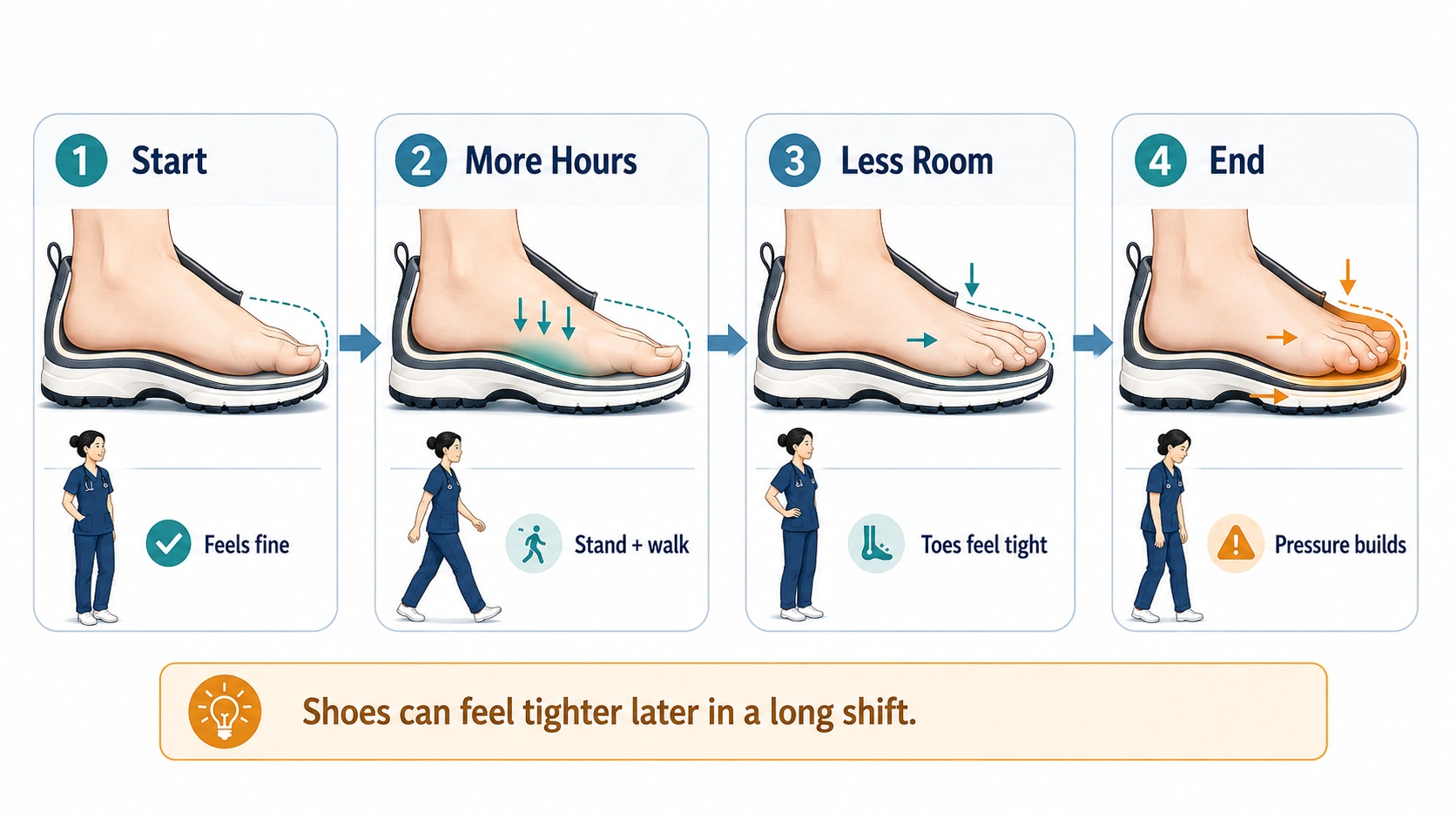
Here is something many buying guides do not explain clearly: your shoes are tested under one condition, but worn under another.
At the start of a shift, your feet may feel fresh. The shoe may feel snug but acceptable. After hours of walking, standing, pivoting, and moving around hard floors, your feet may feel fuller inside the same shoe.
That extra pressure can make a toe box that felt fine in the morning feel tight later in the day. The space your toes need near the end of a shift may be more than the space they needed when you first put the shoes on.
This is why trying on shoes later in the day, or after you have been on your feet for a while, can give a more realistic fit check than trying them on first thing in the morning.
5 Footwear Reasons Your Toes Hurt on Long Shifts
End-of-shift foot fullness matters, but it is rarely the only reason. These are the five footwear fit issues to check first.
1. The Toe Box Is Too Narrow for Your Foot Shape
The toe box is the front section of the shoe that surrounds your toes. It is one of the most commonly overlooked parts of nursing shoe fit.
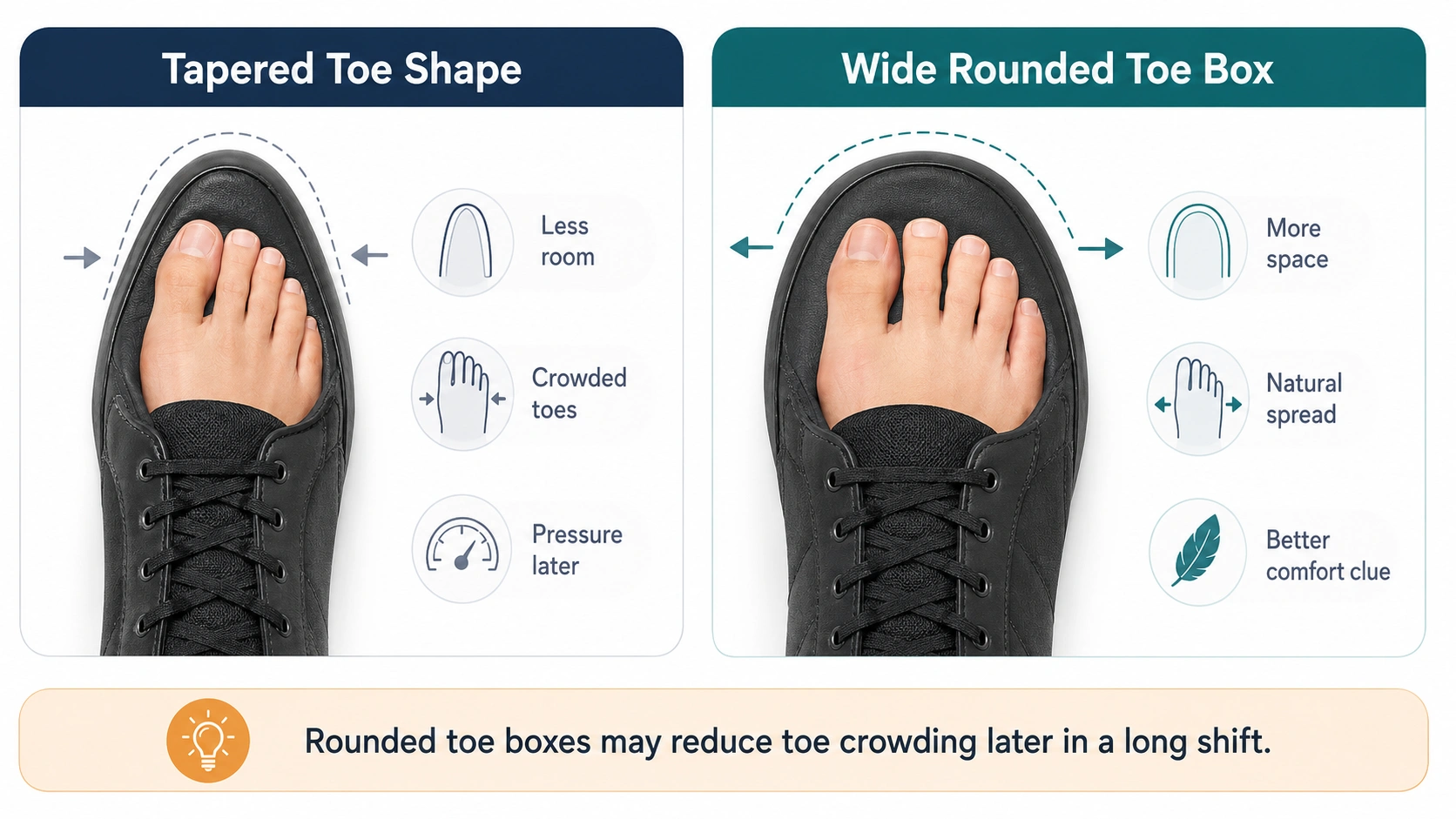
Many nursing shoes, especially traditional clogs and older-style work shoes, can have a more tapered front than your foot needs under weight-bearing. That shape can push your toes together, limit natural toe spread, and create rubbing or pressure along the sides.
A good toe box lets your toes sit flat without pressing against the sides or against each other. It does not need to feel loose. It just needs to avoid restricting the toe area during hours of standing and walking.
2. The Shoe Is the Right Length but the Wrong Width
This issue catches many nurses off guard. When toes start hurting, the first instinct is often to go up half a size.
But length and width are different dimensions. If the shoe is too narrow across the forefoot, buying a longer shoe may create extra space at the front while the sides still press into your toes.
A simple at-home check is to remove the insole from your current shoe and stand on it in your socks. If your toes overhang the sides of the insole, the issue is likely width rather than length.
For a deeper fit breakdown, read StandingSole’s guide to nursing shoes for wide feet.
3. The Midsole Has Compressed and Your Foot Slides Forward
This problem is easy to miss because the pain feels like a toe problem, not a shoe-age problem.
When the midsole loses structure over time, your foot may sit differently inside the shoe. The shoe may feel flatter, less controlled, or less secure than it did when it was new.
As the shoe loses support, your foot may slide forward more easily. That reduces usable toe space and can make toes press against the front of the shoe even when the size has not changed.
A quick check: press your thumb into the midsole. If the foam stays compressed or feels flat compared with when the shoe was new, the shoe may no longer provide the same support.
StandingSole’s shoe replacement guide covers this issue in more detail: how often nurses should replace their shoes.
4. The Lacing or Closure Is Too Tight Across the Forefoot
This is a quick fix that many nurses do not try.
When you are moving quickly, it is natural to want your shoes to feel secure. But laces pulled too tightly across the widest part of the foot can add pressure over the forefoot and make the toe area feel crowded from above.
A simple test is to loosen the middle laces across the widest part of your foot while keeping the heel area secure. If your toes feel better, the lacing pattern may have been part of the problem.
5. The Heel Is Not Locking Your Foot in Place
A loose heel counter can create toe pain indirectly.
When the heel area is too loose, too soft, or broken down with age, your heel may lift slightly with each step. That movement can let the foot creep forward inside the shoe.
Over hundreds of steps, that forward movement can increase toe pressure, even if the shoe had enough room when you first put it on.
A proper heel fit should feel secure but comfortable. Your heel should not repeatedly lift inside the shoe while walking.
What Type of Toe Pain Are You Having? And What It Usually Means
Not all toe pain comes from the same fit issue. The pattern can help you decide which shoe feature to check first. This is not a diagnosis, but it can be a useful footwear checklist.
| Toe Pain Pattern | Possible Footwear Fit Clue | What to Check Next |
|---|---|---|
| Pain or pressure at the tips of the toes | Your foot may be sliding forward, the shoe may be too short, or the heel may not be secure. | Check heel hold and leave comfortable space in front of the longest toe. |
| Cramping between toes or across the ball of the foot | The toe box may be too narrow or too shallow. | Look for a roomier toe box and consider true wide width if side pressure remains. |
| Numbness or tingling in the toes | The toe box, socks, insoles, or forefoot lacing may be adding too much pressure. | Try loosening the midfoot laces and checking width. Speak with a healthcare professional if numbness persists. |
| Blisters on the big toe or pinky toe side | The shoe shape may not match your foot shape. | Compare tapered toe boxes with rounded or squared toe box profiles. |
How to Check If Your Toe Box Fits Before You Buy
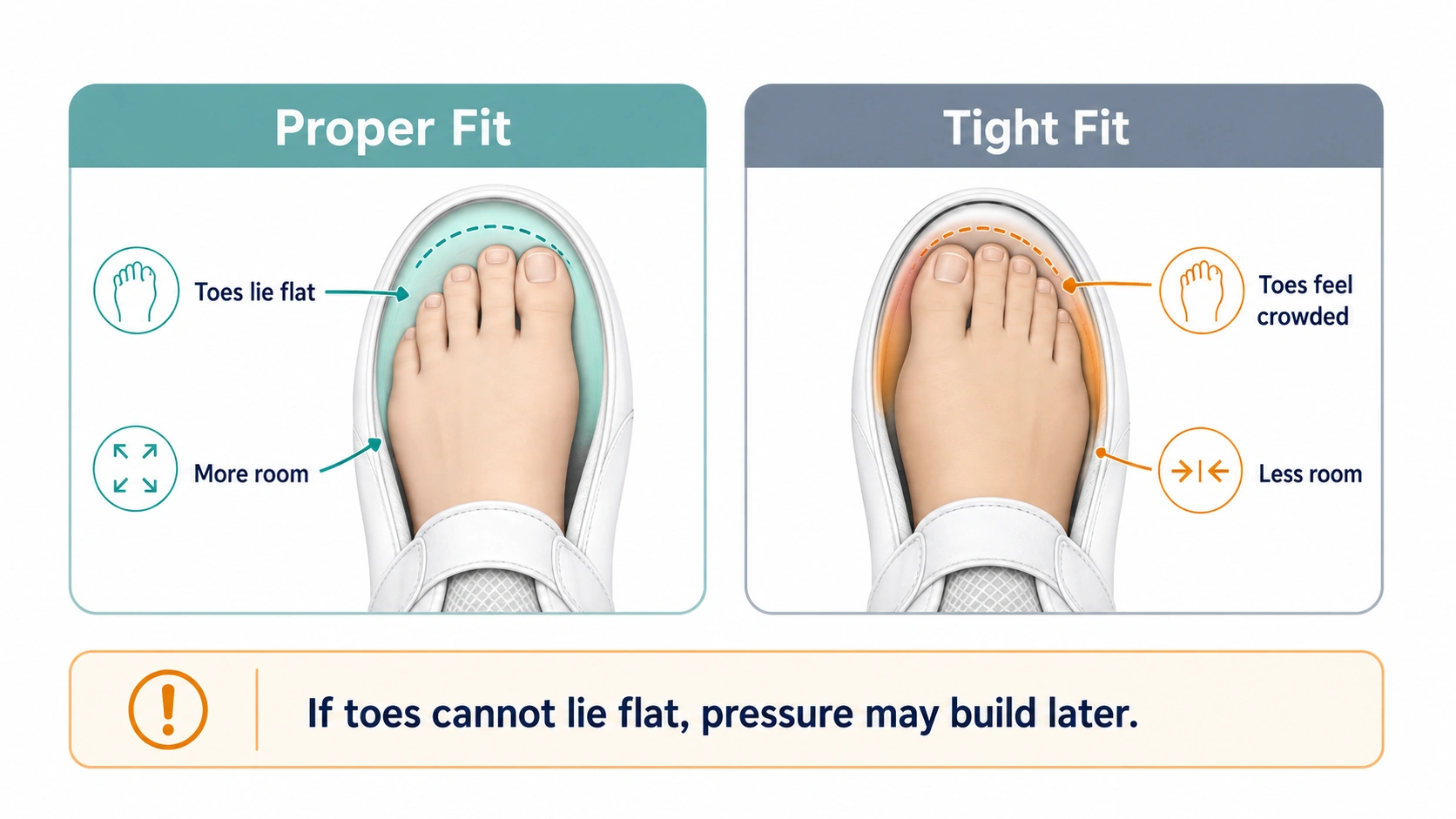
Whether you are in a store or ordering online, these checks can help you decide whether the toe box is likely to work for your feet.
The Insole Test
Remove the insole from the shoe and stand on it in your socks. Your toes should stay comfortably within the outline of the insole. If they overhang the sides, the shoe is likely too narrow for your foot width, regardless of the length.
The Thumb-Width Rule
When the shoe is on your foot, press gently at the front. There should be comfortable space between the tip of your longest toe and the end of the shoe. This helps account for foot movement and end-of-shift pressure.
Timing Matters
Try on shoes in the late afternoon or evening, or after you have been on your feet for a few hours. Your feet may feel fuller at that point, which can give you a more realistic long-shift fit check.
The Wiggle Check
With the shoe on and laced normally, check whether you can wiggle your toes. They should not be pressed against each other or against the sides of the shoe.
When Ordering Online
Read reviews specifically for toe box comments, not just overall comfort. Phrases like “runs narrow at the toe,” “toe box is generous,” or “needed wide width” can give useful fit clues that product descriptions may not explain clearly.
What to Look for in a Nursing Shoe That Will Not Hurt Your Toes
Once you understand the problem, it becomes easier to know what to look for. These features can make a real difference for toe comfort during long shifts.
- Roomy toe box: Look for a rounded or square toe profile if tapered shoes crowd your toes.
- Adequate length: Leave comfortable space in front of your longest toe, especially if your feet feel fuller later in the day.
- Width options: If standard width causes cramping, look for wide or extra-wide options instead of only sizing up.
- Structured heel counter: The back of the shoe should hold your heel securely without repeated up-and-down movement.
- Midsole that holds up: Cushioning should feel comfortable without feeling flat, unstable, or collapsed.
- Adjustable upper: Laces, straps, or other closures can help you fine-tune the fit as foot volume changes during a shift.
Quick Fixes That Can Help Right Now With Your Current Shoes
If you are not ready to buy new shoes yet, a few short-term adjustments may help you identify what is going wrong.
Loosen the Midfoot Laces
Re-lace your shoes so the heel area remains secure, but the middle section across the widest part of your foot is slightly looser. This may reduce forefoot pressure without making the shoe feel unstable.
Try the Insole Test
Remove the insole and check whether your toes overhang the sides. If they do, you have strong evidence that width is part of the problem.
Rotate Between Two Pairs
If you can manage two pairs, alternating them gives each pair more time to dry and recover between shifts. It may also slow the feeling of midsole compression from repeated use.
Check Your Socks
Very thick socks can reduce the space inside the shoe and worsen toe pressure. A thinner moisture-wicking sock may give your toes slightly more room without changing the shoe.
When to Get a New Pair of Nursing Shoes
Nursing shoes take a lot of daily impact. Hard floors, constant walking, and fast pivoting can wear down shoe structure before the outside looks damaged.
A shoe can look clean but feel different inside. The upper may still look fine. The outsole may still have tread. But if the midsole has compressed or the heel counter has softened, your foot may sit differently inside the shoe.
Signs it may be time to replace your nursing shoes include:
- Pain starts appearing earlier in your shift than it used to.
- Pressing the midsole with your thumb leaves a lasting indent.
- Your feet hurt more at the end of shifts than they did when the shoes were newer.
- Your heel lifts slightly inside the shoe.
- The shoe feels flatter, looser, or less supportive than before.
There is no perfect replacement schedule for every nurse. Shift frequency, floors, body mechanics, shoe materials, rotation, and cleaning exposure all matter. The most reliable guide is how the shoe performs compared with when it was new.
For a deeper replacement checklist, read StandingSole’s guide on how often nurses should replace their shoes.
Is It Time to Look at a Different Shoe?
If you have worked through the checks above and nothing improves the toe pain, the shoe model may simply be wrong for your foot shape.
Not every shoe fits every foot. A model that works well for a colleague with a narrow foot may be a poor fit for someone with a wider forefoot, higher-volume foot, or different toe shape.
This is not about brand quality alone. It is about fit compatibility.
Before buying your next pair, get clear on the specific issue: length, width, toe box shape, heel security, lacing pressure, sock thickness, or midsole condition. Then compare shoes based on that problem instead of choosing only the most popular nursing shoe online.
Signs Your Toe Box Might Be the Problem: Quick Checklist
Use this before your next shoe purchase.
- My toes feel cramped or pressed together inside the shoe, not just at the tips.
- The pain is worse across the ball of the foot or between toes.
- My toes overhang the sides of the insole when I stand on it.
- The shoe feels fine early in the day but noticeably tighter by mid-shift.
- I have sized up in length, but toe cramping is still there.
- I get blisters on the inner edge of my big toe or outer edge of my pinky toe.
- My toes feel better when I loosen the forefoot or midfoot lacing.
If several of these are true, a roomier toe box, a true wide width, or both may be worth checking before you buy again.
Frequently Asked Questions
Why do my toes go numb in my nursing shoes?
Numbness that builds during a shift may be related to pressure from a narrow toe box, thick socks, added insoles, or laces pulled too tightly across the forefoot. Try checking the fit and loosening the midfoot laces. Persistent numbness that is not clearly linked to shoe fit should be discussed with a healthcare professional.
Should I buy nursing shoes half a size up?
Sometimes, but going up in length does not always solve the problem. If the shoe is too narrow across the toe box or forefoot, extra length can create dead space at the front while the sides still compress your toes. Width is often the more important dimension to check.
Why do my nursing shoes hurt my big toe specifically?
Pain along the inner edge of the big toe may happen when the toe box tapers inward and presses the big toe sideways. A more rounded or squared toe box may fit better for some foot shapes. If you have persistent pain, bunion-related pressure, or worsening symptoms, speak with a healthcare professional.
Can worn-out midsoles cause toe pain?
Yes, indirectly. When a midsole compresses, your foot may sit differently or slide forward inside the shoe. That can reduce usable toe space and increase pressure at the front of the shoe, even if the shoe size has not changed.
What does a proper toe box fit feel like?
Your toes should be able to wiggle and sit naturally without pressing against each other or against the sides of the shoe. The heel should also feel secure, because a loose heel can let the foot slide forward and create toe pressure.
Is it normal for feet to hurt after a 12-hour shift even with good shoes?
Some tiredness after a long shift can happen, but sharp toe pain, repeated blisters, numbness, or pain that starts early in the shift may point to a fit problem or a symptom worth discussing with a healthcare professional.
When should I replace my nursing shoes?
Consider replacement when the shoes perform worse than they did when new. Signs include midsole compression, earlier shift pain, heel slipping, flatter cushioning, or a shoe that feels less stable than before.
Are clogs bad for toe pain?
Not always. Some clog styles work well for some people, while others may have a loose heel or narrower toe profile. Judge any clog by whether it holds your heel securely, allows your toes to sit naturally, and maintains support through a full shift.
A Note on Persistent Pain
This guide focuses on footwear fit, which is one common and fixable cause of toe discomfort during nursing shifts.
However, shoes are not the answer to every type of toe or foot pain. If you have changed shoes, adjusted lacing, tried different sizes or widths, and the pain continues, speak with a qualified healthcare professional. Some foot issues have causes that go beyond what a shoe change can address.
Sources Consulted
This article was prepared by reviewing nurse-footwear guidance, foot comfort resources, workplace footwear context, and Google Search Central guidance. Non-medical nursing lifestyle sources were used only for background context, not as medical authority.
Cleveland Clinic: Nursing Self-Care
Reviewed for nurse foot-care and footwear comfort context.
Nebraska Medicine: Nursing Shoes Guide
Reviewed for nursing shoe fit, toe pinching, heel slipping, and blister-related footwear context.
Florence: Achy Feet on a Long Shift
Reviewed for general long-shift foot comfort and shoe-fitting timing context.
NurseBuff: Foot Care Hacks for Nurses
Reviewed as background context for nurse foot-care routines and common reader concerns.
Fastaff: Aching and Swollen Feet
Reviewed as background context for nurse shoe wear, rotation, replacement reminders, and end-of-day shoe fitting.