


Quick Answer
Most nurses should plan to replace their work shoes every 4 to 8 months, depending on shift frequency, walking distance, shoe type, and how the shoes feel underfoot.
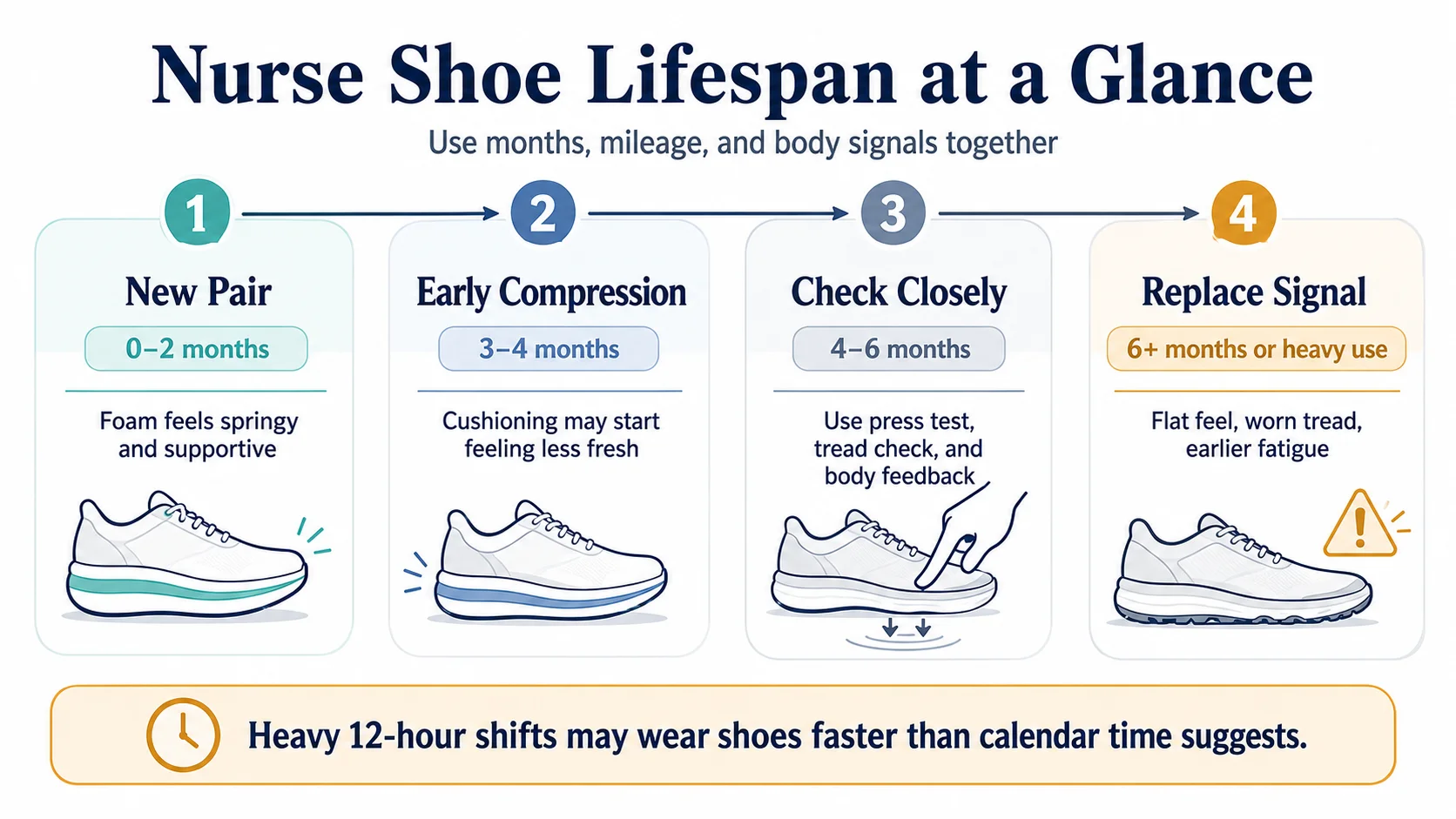
A useful benchmark is the 6-month mark. Nurse.com summarizes a MedSurg Nursing study that recommended replacing nursing shoes every 6 months because internal structural breakdown can happen even when shoes still look fine.
Performance shoes are also commonly discussed around the 300 to 500 mile range, but nursing work is not only about mileage. Standing, slow walking, pivoting, and long shifts on hard floors can all affect how quickly cushioning feels worn.
The best answer is not just calendar time. It is months + mileage + how your feet feel.
| Your Work Pattern | Practical Replacement Window |
|---|---|
| Heavy 12-hour shifts, one daily pair | Around 4 to 6 months |
| Three 12-hour shifts per week | Around 4 to 8 months |
| Part-time or lower-mileage clinical work | Around 6 to 10 months |
| Two-pair rotation | Often longer than one pair used daily |
Affiliate disclosure: StandingSole may earn a commission from qualifying purchases made through links on this page. This does not affect our recommendations.
Why Nursing Shoes Wear Out Before They Look Worn
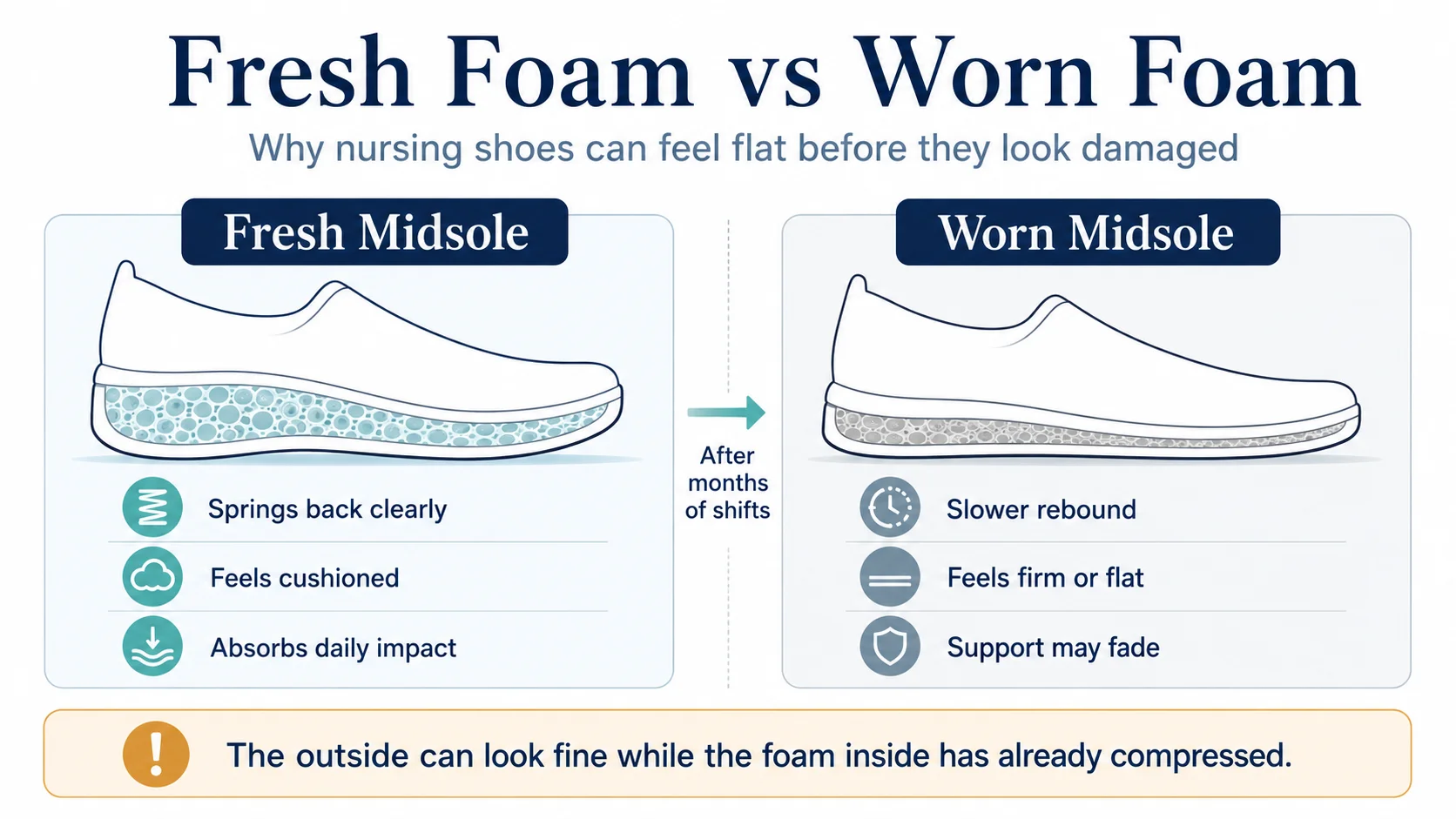
Most athletic-style nursing shoes use a cushioned midsole. Many are made with EVA foam, while some clogs and professional shoes use PU foam.
The midsole is the layer doing much of the cushioning work. Every step compresses it. When the foam is newer, it rebounds more clearly. After months of repeated compression, the foam may feel flatter, firmer, or less responsive.
That is why a nursing shoe can pass a quick visual check but still feel dead underfoot.
Traditional midsole foams can lose resilience as repeated compression affects the foam structure, and PU midsoles are often described as longer-lasting than EVA midsoles, although exact lifespan still depends on shoe design and usage.
The Nurse Mileage Math

Shoe replacement advice often uses the 300 to 500 mile range. That range is not perfect for nurses, but it is useful because it gives you a practical way to estimate wear.
Nurses do not all walk the same amount. A floor nurse on a busy unit may put much more stress on shoes than a clinic nurse with shorter walking patterns.
Use this formula:
Example Nursing Shoe Replacement Estimates
| Nurse Profile | Miles Per Shift | Shifts Per Week | Estimated Monthly Miles | Reaches 300 Miles Around |
|---|---|---|---|---|
| Floor nurse, three 12-hour shifts | 8 miles | 3 | About 96 miles | About 3 months |
| Floor nurse, three 12-hour shifts | 6 miles | 3 | About 72 miles | About 4 months |
| Clinic nurse, five 8-hour shifts | 4 miles | 5 | About 80 miles | About 4 months |
| Part-time nurse, two 12-hour shifts | 6 miles | 2 | About 48 miles | About 6 months |
These are estimates, not exact cutoffs.
A shoe does not automatically fail at 300 miles. But if you are near that point and your feet feel more tired than usual, it is time to inspect the shoe carefully.
Walking Miles Are Not the Same as Running Miles

Nursing miles are different from running miles.
Runners usually load the shoe in shorter, higher-impact sessions. Nurses often stand, walk slowly, pivot, and stay on hard floors for long periods.
That sustained pressure matters. When shoes are used as daily walking or work shoes, consistent pressure on cushioning components can cause materials to break down faster than expected.
So for nurses, the mileage number should be treated as a warning signal, not a strict deadline.
The Rotation Advantage
Rotating two pairs can help because each pair gets more time to dry and decompress between shifts.
This does not make shoes last forever. But it can reduce the daily stress placed on one pair.
A simple rotation looks like this:
| Shift Day | Pair Used |
|---|---|
| Monday | Pair A |
| Tuesday | Pair B |
| Wednesday | Pair A |
| Thursday | Pair B |
For nurses working frequent 12-hour shifts, a second pair can be more practical than wearing one pair until it fully collapses.
The 5-Minute Self-Test
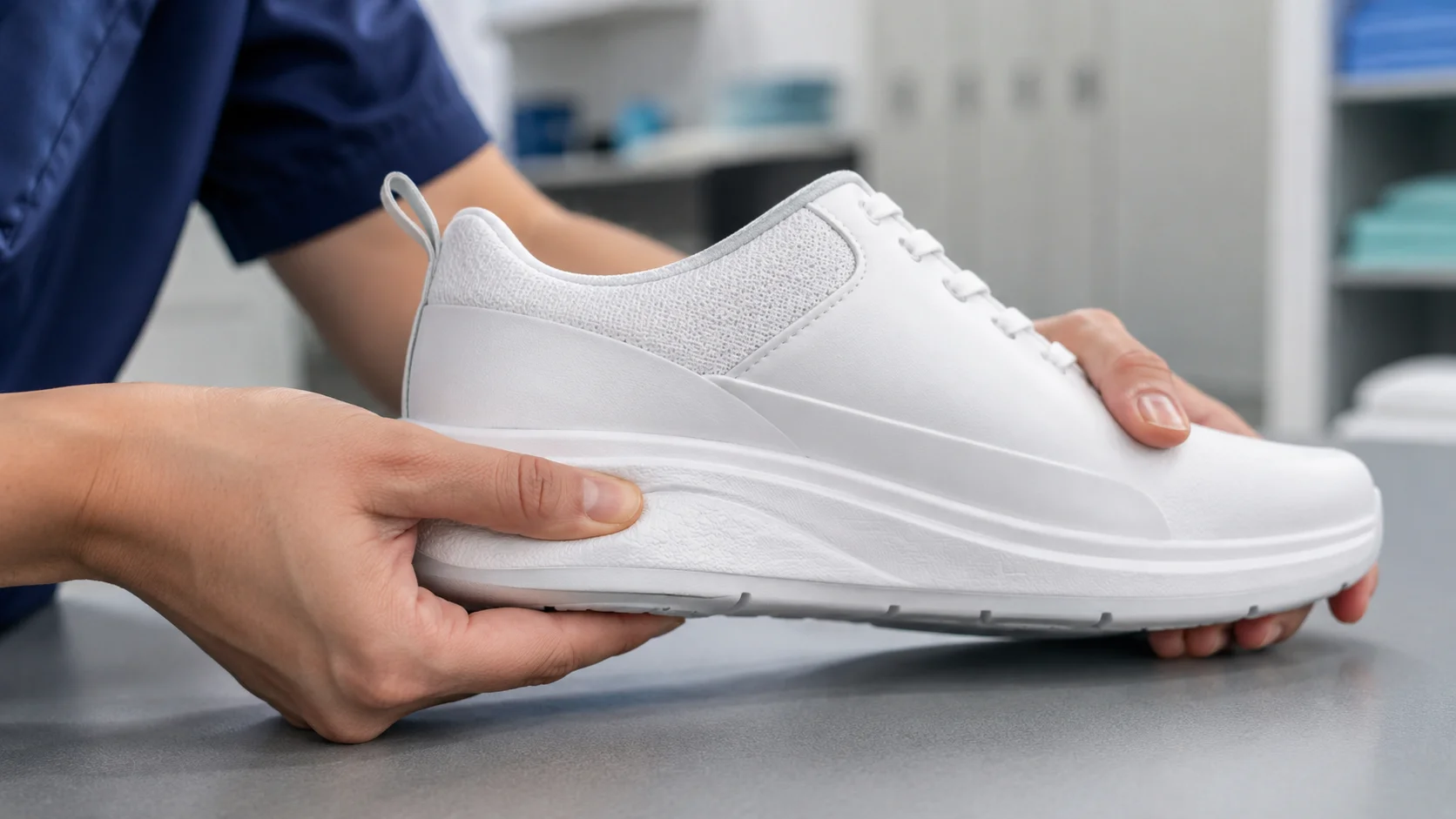
You do not need lab equipment to check your nursing shoes.
Use these four quick tests.
Test 1: The Press Test
Press your thumb firmly into the midsole.
The midsole is the cushioning layer between the outsole and the upper. It is usually visible from the side of the shoe.
Press in, then release.
| Result | What It May Mean |
|---|---|
| Foam springs back quickly | Cushioning may still be responsive |
| Foam returns slowly | Midsole may be losing rebound |
| Foam stays compressed | Shoe may be near replacement |
This test is not perfect, but it is a useful first check.
Test 2: The Flat Surface Test
Place the shoe on a flat floor or table.
Look at it from eye level.
| Result | What It May Mean |
|---|---|
| Shoe sits flat and stable | Shape may still be even |
| Shoe rocks or tilts | Midsole or outsole may be unevenly worn |
| One side sinks lower | Compression may be heavier on one side |
Uneven wear can change how the shoe feels during a long shift.
Test 3: The Outsole Check
Flip the shoe over and inspect the tread.
Look closely under the heel and ball of the foot.
| Result | What It May Mean |
|---|---|
| Tread pattern is still clear | Outsole may still have grip |
| Tread looks smooth or flattened | Slip resistance may be reduced |
| One side is much more worn | Your gait or shoe structure may be uneven |
This matters on hospital floors because wet, polished, or freshly cleaned surfaces can become slick.
Test 4: The Body Check
Ask yourself:
- Do my feet feel tired earlier in the shift than they used to?
- Do I notice new arch, heel, knee, or lower back discomfort?
- Do the shoes feel flatter than they did when they were newer?
- Do I feel less stable when standing or walking?
Your body feedback does not diagnose the problem. But it can tell you when your shoes no longer feel supportive enough for your normal shift.
Do Not Confuse Outsole Wear With Midsole Breakdown
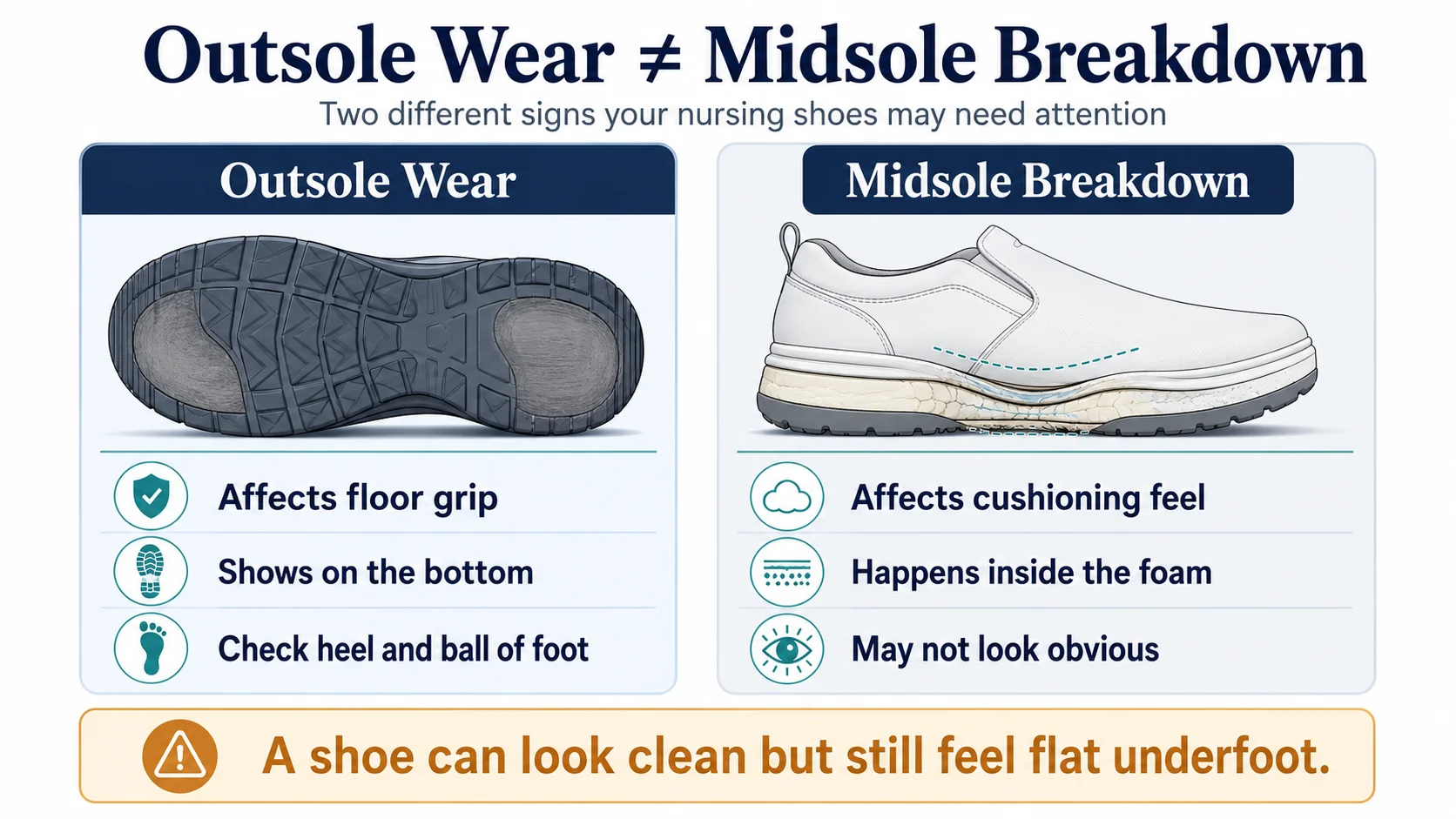
Outsole wear and midsole breakdown are not the same thing.
The outsole is the bottom tread. When it wears smooth, grip can decline.
The midsole is the cushioning layer. When it breaks down, the shoe may feel flat, hard, or less supportive.
A shoe can have worn tread but still some midsole structure. A shoe can also have intact tread but compressed foam.
Both can be reasons to replace the shoe, but they point to different problems.
EVA vs. PU: Does Foam Type Change Shoe Lifespan?
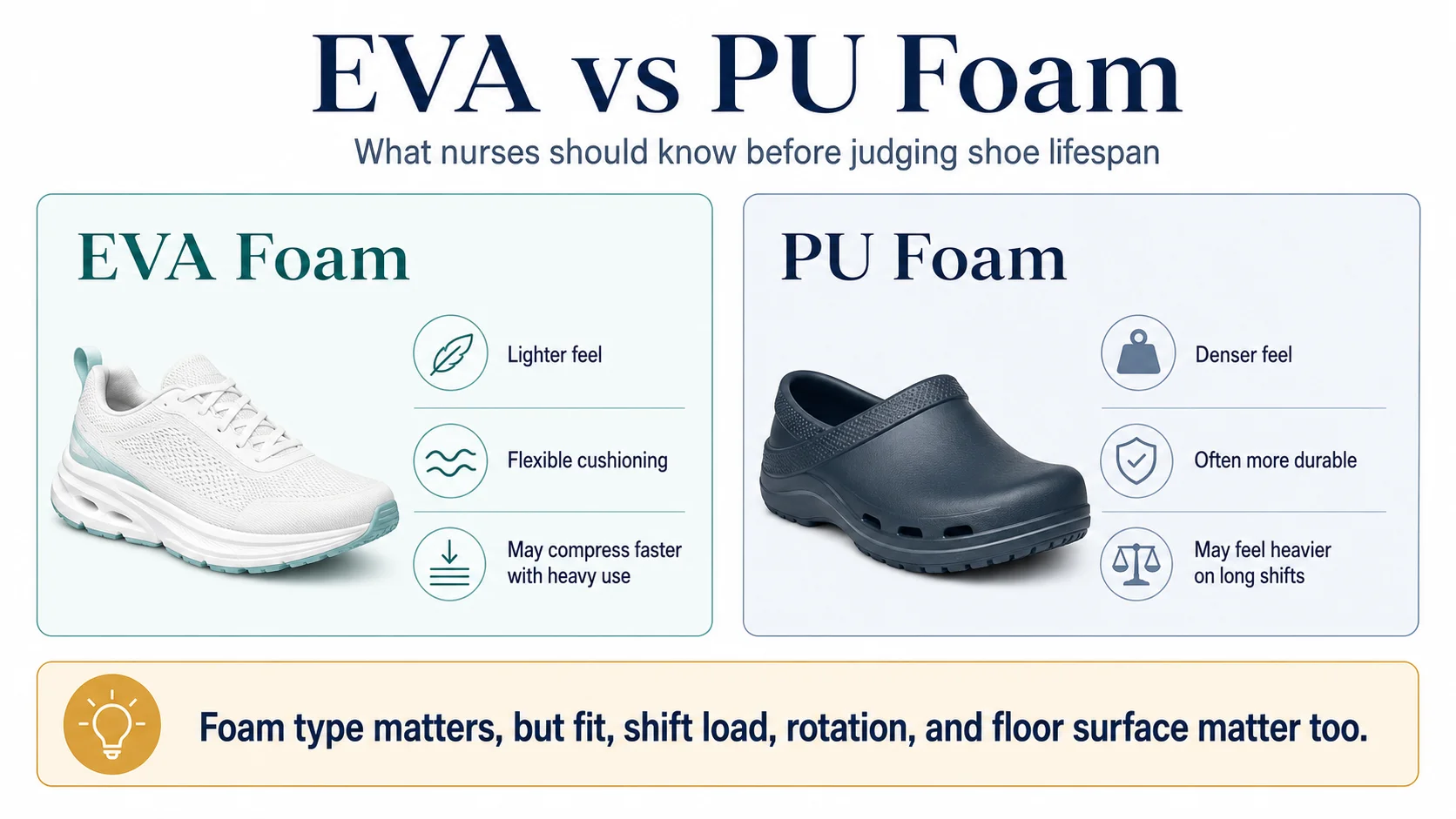
Yes, foam type can affect how long a nursing shoe feels supportive.
But there is no universal lifespan for every shoe. Brand, body weight, walking pattern, floor surface, moisture, and shift load all matter.
EVA Foam
EVA foam is common in athletic-style nursing shoes.
It is usually lightweight, flexible, and comfortable at first. The tradeoff is that basic EVA can compress faster under frequent use.
For heavy nursing shifts, many EVA-based shoes may start feeling worn around 4 to 6 months, especially if one pair is used repeatedly.
PU Foam
PU foam is common in many clogs and professional-style shoes.
It is usually denser and may resist compression better than basic EVA. The tradeoff is weight. PU shoes can feel heavier during long shifts.
For heavy use, PU-based shoes may sometimes feel supportive longer, often around 6 to 10 months, depending on the shoe and workload.
Advanced Foam Blends
Some premium athletic shoes use newer foam blends.
These may feel lighter or more responsive, but lifespan varies by brand and model. Do not assume a higher price automatically means the shoe will last longer.
Quick Foam Comparison
| Foam Type | Common Shoe Type | Feel | Compression Pattern | Practical Heavy-Use Expectation |
|---|---|---|---|---|
| EVA | Athletic nursing sneakers | Lighter | Often faster | Around 4 to 6 months |
| PU | Clogs/professional shoes | Heavier | Often slower | Around 6 to 10 months |
| Advanced blends | Premium athletic shoes | Varies | Varies | Depends on model |
This does not mean every nurse should switch to clogs or premium sneakers.
It simply helps you set realistic expectations.
Signs Your Nursing Shoes Are Already Past the Line
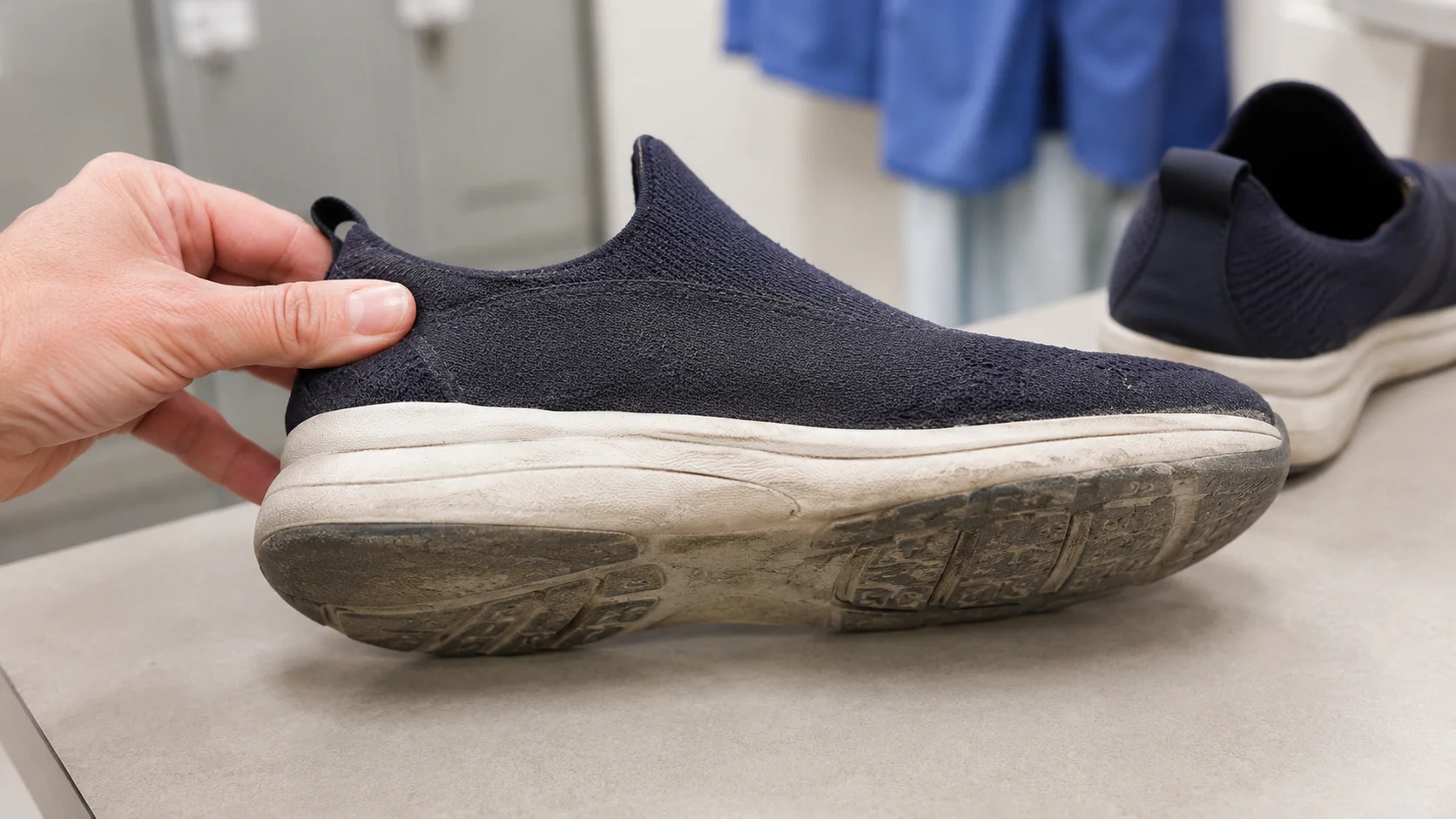
Sometimes the shoe is already worn out, but the nurse has not connected the discomfort to the shoe yet.
Physical Signs
- Compression creasing along the midsole
- Smooth tread under the heel or ball of the foot
- Upper material cracking or pulling away from the sole
- Shoe feels noticeably flatter than when new
- Foam fails the press test
- Shoe sits unevenly on a flat surface
- One side of the sole looks more collapsed than the other
Body Signals
- Your feet feel tired earlier in the shift
- You notice new arch, heel, knee, or lower back discomfort
- Your balance feels slightly off
- Your foot feels like it rolls inward more than usual
- The shoe no longer feels like the same shoe you bought
- You feel a flat or sinking sensation underfoot
These signals do not prove the shoe is the only cause. But they are good reasons to check the shoe closely.
The “Still Looks Fine” Trap
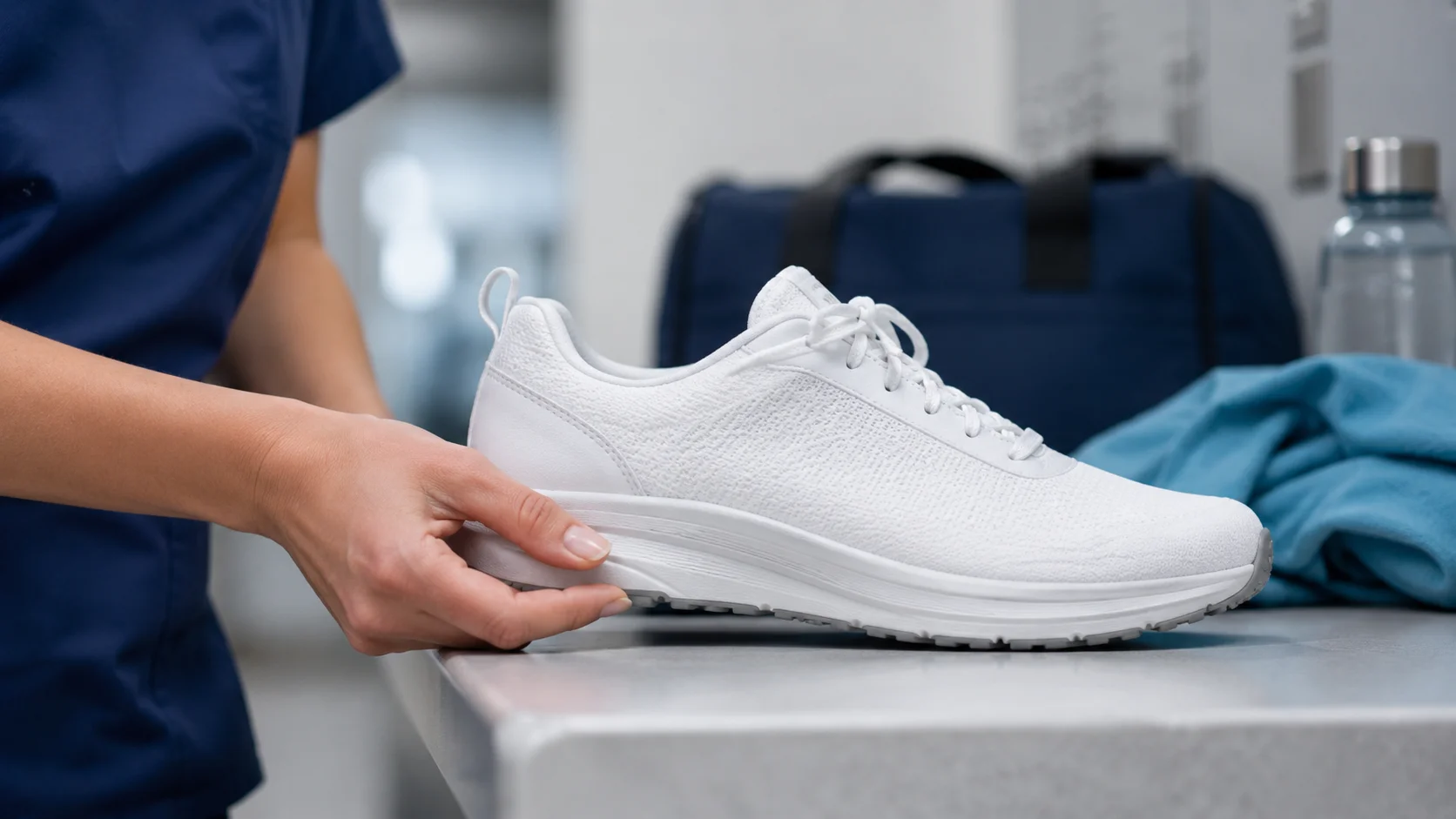
This is where many nurses keep shoes too long.
The upper may still look clean. The outsole may not look terrible. But the midsole can still be compressed.
A visual check alone is not enough.
Use the press test, flat surface test, outsole check, and body check together.
Hygiene Also Matters
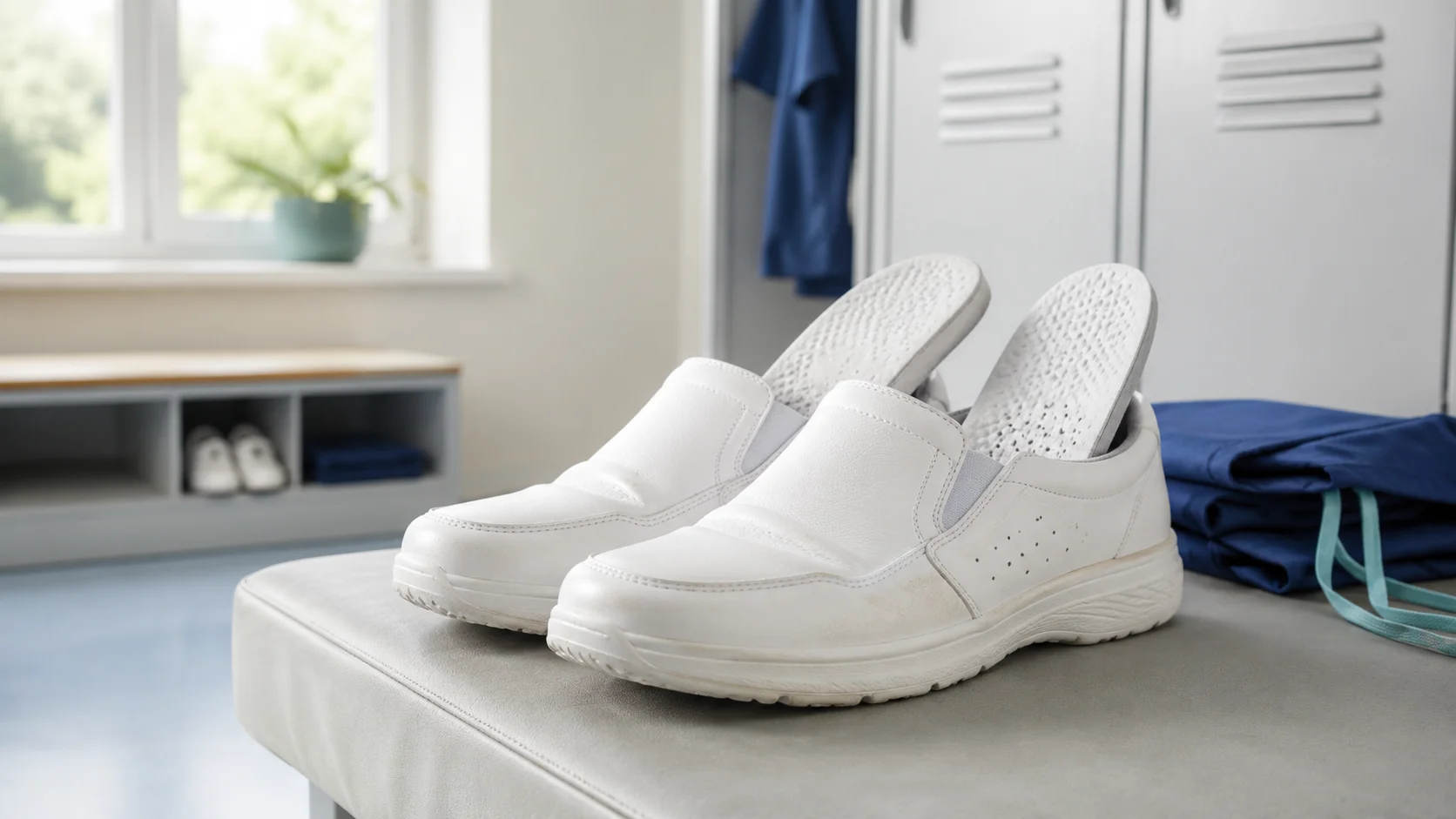
Clinical shoes can collect moisture, odor, and workplace residue over time.
Even if a pair is structurally borderline, hygiene may be another reason to replace it sooner.
This is not a medical claim. It is practical context for shoes used in clinical environments.
How to Make Nursing Shoes Last Longer
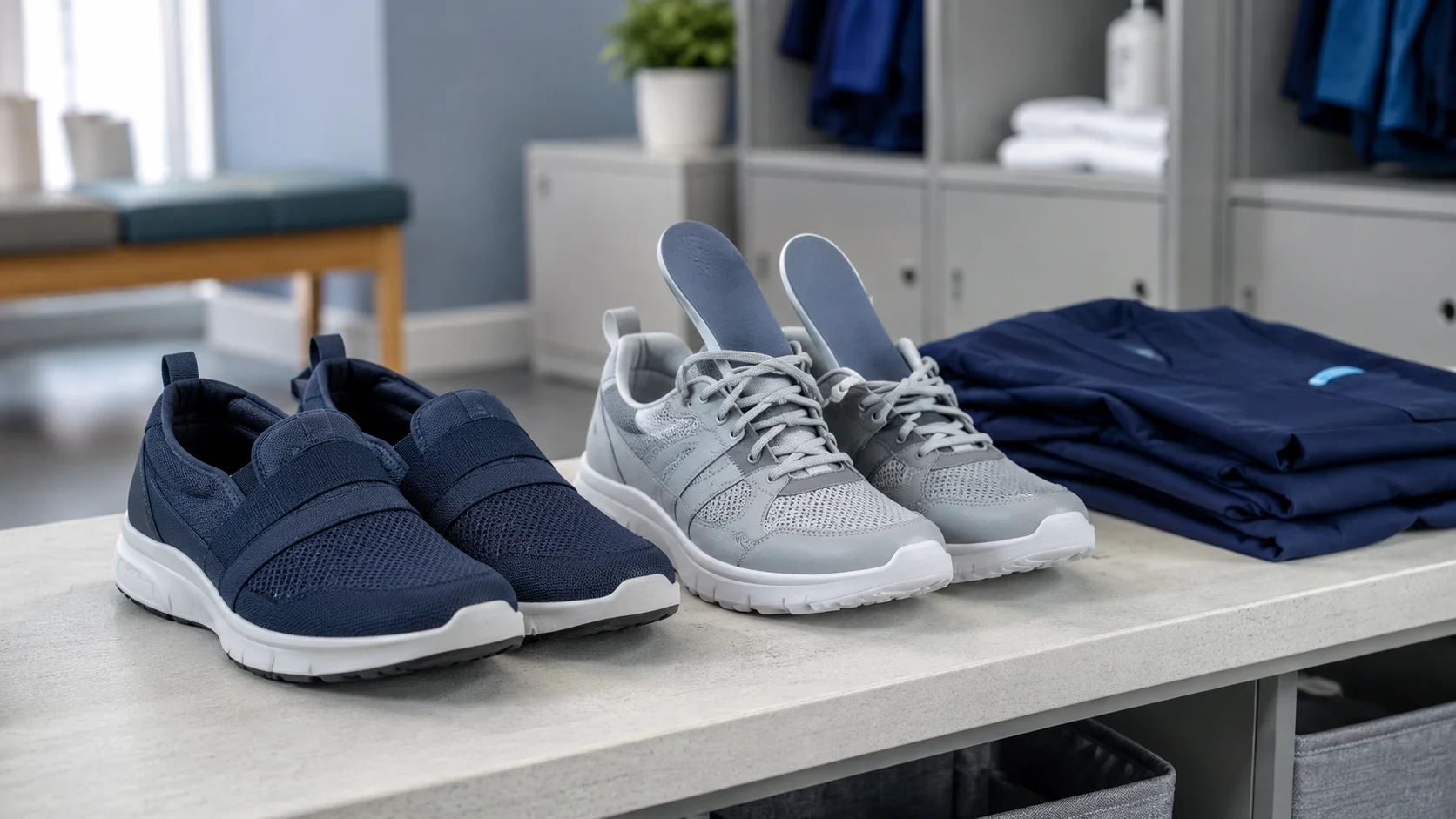
Rotate Two Pairs
This is often the most practical habit for nurses working long shifts.
Instead of wearing one pair every shift, rotate between two pairs so each pair gets recovery time.
Let Shoes Dry Between Shifts
After work, avoid sealing shoes in a bag or locker overnight.
Let them air out in a dry, room-temperature space.
You can also remove the insoles to help the inside dry faster.
Clean According to the Manufacturer’s Instructions
Use mild cleaning methods unless the shoe manufacturer says otherwise.
Harsh chemicals can damage some upper materials, adhesives, or finishes.
Replace Insoles Before the Shoe Fully Collapses
New insoles can refresh surface comfort.
But they cannot fix a collapsed midsole.
Do Not Use Work Shoes for Errands
Every extra mile counts.
If you wear your nursing shoes for grocery runs, commuting, or casual walking, you are adding more compression to the same foam.
Avoid Hot Car Storage
Heat can affect shoe materials and adhesives.
Do not leave nursing shoes in a hot car trunk for long periods.
When It Is Time to Replace Your Nursing Shoes

Replace Now If:
- You are past 5 to 6 months of daily or near-daily use
- The foam fails the press test
- The foam returns slowly or stays compressed
- The tread is smooth in high-contact areas
- Foot, arch, heel, knee, or back discomfort has increased
- You see compression creasing in the midsole
- The shoe rocks, tilts, or sits unevenly
- The shoe feels flat compared with when it was new
You Can Wait If:
- The shoes are under 3 months old
- The foam rebounds quickly during the press test
- The tread is still clear
- The shoe sits evenly on a flat surface
- You do not feel new fatigue or discomfort patterns
Consider a Second Pair If:
- You use one pair for every 12-hour shift
- Your shoes are 3 to 4 months old and already feel less cushioned
- You are close to the higher-mileage estimates
- You want to reduce daily stress on one pair
Frequently Asked Questions
How often should nurses replace their shoes?
Most nurses should plan to replace their shoes every 4 to 8 months, depending on shift frequency, walking distance, shoe type, and wear signs.
The 6-month mark is a useful benchmark, but heavy-shift nurses may reach replacement earlier. Part-time nurses may have a longer window.
My shoes still look fine. Do I really need to replace them?
Maybe. Shoes can look fine outside while the midsole foam has already lost rebound inside.
Use the press test, flat surface test, outsole check, and body check before deciding.
Does rotating two pairs really help?
Yes, it can help. Rotating shoes gives each pair more time to dry and decompress between shifts.
It does not stop wear, but it can reduce daily stress on one pair.
Do clogs last longer than sneakers for nursing?
Sometimes. Many clogs use denser materials such as PU, which may resist compression longer than basic EVA.
But clogs can also feel heavier, and comfort depends on fit, foot shape, and shift demands.
Can I replace the insoles instead of the whole shoe?
Sometimes. If the midsole is still in good shape, new insoles may improve surface comfort.
But if the midsole is already compressed, new insoles will not restore the shoe’s original support.
How many miles do nurses walk per shift?
It varies. Some clinic-based roles may involve lower mileage. Busy floor nurses may walk much more during a 12-hour shift.
Your role, unit, facility layout, patient load, and break pattern all affect mileage.
What are the first signs that nursing shoes are wearing out?
The first signs are often earlier foot fatigue, flat or sinking feel underfoot, poor foam rebound, worn tread, midsole creasing, and new arch, heel, knee, or lower back discomfort.
These signs do not diagnose a medical issue, but they can tell you it is time to inspect your shoes.
Does shoe price affect how long nursing shoes last?
Sometimes, but not always. Better materials may last longer, but even premium shoes have a limited lifespan.
Foam type, rotation, shift load, walking distance, and storage habits often matter more than price alone.
A Note on Foot Pain

This guide is about footwear, not medical diagnosis.
If you have persistent foot, heel, knee, or back pain that does not improve after changing shoes or adjusting footwear, speak with a qualified healthcare professional.
Shoes can affect comfort, but they are not the only possible cause of pain.
Final Takeaway
Nursing shoes do not always need to look destroyed before they stop feeling supportive.
The midsole can lose rebound while the upper still looks clean, which is why nurses should check both visible wear and body feedback.
Use the 4 to 8 month range as a practical planning window, but also consider your shift load, walking distance, shoe type, tread wear, midsole rebound, and how your feet feel during the same type of shift.
When in doubt, use the press test, flat surface test, outsole check, and body check together instead of judging the shoe by appearance alone.
Sources Consulted
This article was prepared using footwear replacement guidance, healthcare footwear resources, foam material information, and nurse-specific replacement discussions.
Nurse.com: The Truth About Your Shoes
Supports the discussion of nursing shoe replacement timing, the 6-month benchmark, and the idea that shoes can lose internal support before obvious external damage appears.
Brooks Running: Shoe Replacement Guidance
Supports the discussion of common shoe mileage ranges and why work or daily walking use can affect cushioning breakdown.
Read the Brooks replacement guidance
Brooklyn Running Company: How Long Do Running Shoes Last?
Supports the discussion of how running shoe foam and cushioning materials can degrade with repeated use.
Read the Brooklyn Running Company guide
Meindl USA: Performance Midsoles
Supports the discussion of EVA and PU midsole characteristics and durability differences.
Read the Meindl USA midsole guide
Snibbs: How Often Should Nurses Replace Shoes?
Supports the discussion of common replacement signs and nursing shoe wear indicators.
Incredible Health: Nurse Community Feedback
Provides real-world nurse discussion around how often nurses replace their work shoes.
Read the Incredible Health discussion
Shoes for Crews: Healthcare Nursing Shoe Guide
Supports general healthcare footwear context, including workplace shoe considerations for clinical environments.