

Affiliate Disclosure: StandingSole may earn a commission if you buy through links on this page, at no extra cost to you. Our content is written to help readers compare fit, comfort, and workplace requirements clearly. StandingSole has not independently tested any shoes referenced on this site unless clearly stated.
If you have wide feet and you are shopping for nursing shoes, the most important thing to understand is this: a wide toe box and a true wide width are not always the same thing.
That difference matters during a 12-hour shift. A shoe can feel fine when you first put it on, then start pressing across the toes, ball of the foot, or midfoot after hours of walking, standing, and swelling.
This guide explains what wide-footed nurses should check before buying, including toe room, true width, heel lockdown, cushioning, outsole grip, upper material, clinical dress-code considerations, and common buying mistakes.
Wide Toe Box vs. True Wide Width: Why the Difference Matters
These two terms describe different parts of shoe fit. Mixing them up is one reason wide-footed nurses buy shoes that still feel tight during a long shift.
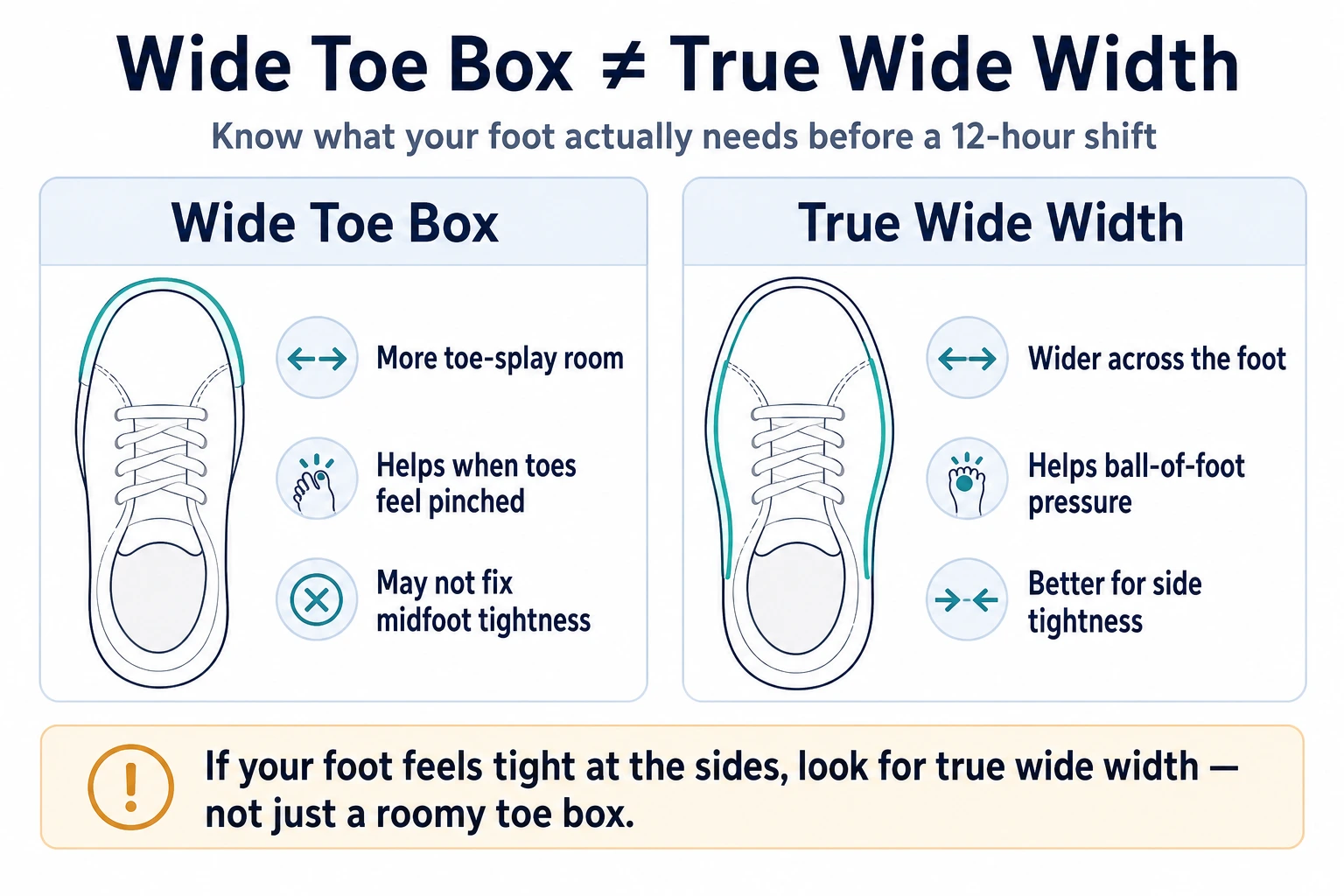
A wide toe box means the front of the shoe has more room for the toes to spread. It usually has a rounder, less tapered shape. But the rest of the shoe may still be built on a standard-width base.
A true wide width means the shoe is built wider across the forefoot and sometimes the midfoot. This affects how the shoe fits across the ball of the foot and along the sides, not only at the toe tip.
There is also a third fit issue: high-volume feet. That means the foot needs more room from top to bottom, not only side to side. If your foot feels squeezed from above, a wide toe box alone may not solve the problem.
| Wide Toe Box | True Wide Width | |
|---|---|---|
| What changes | Shape at the front of the shoe | Width across the forefoot and midfoot |
| Best for | People who mainly need more toe splay room | People whose foot is wide across the ball and midfoot |
| When it may not be enough | When the foot still presses against the sides of the shoe | When only the toe area feels cramped but the rest of the shoe fits well |
If your toes feel cramped at the front, a wider toe box may help. If your foot feels tight across the ball, sides, or midfoot, you may need a true wide-width shoe instead.
What Wide-Footed Nurses Should Check Before Buying

A nursing shoe that works for a few minutes may not work for a full shift. Before buying, check how the shoe handles pressure, movement, and fit changes over time.
Forefoot Room and Toe Splay
Your toes should have enough room to lie flat without pressing into the upper or rubbing against each other. This is especially important during long shifts, because feet may feel fuller later in the day.
The goal is not a loose shoe. The goal is controlled room. Your toes should have space, but your foot should not slide around inside the shoe.
Midfoot Fit and Heel Lockdown
Many wide-footed shoppers focus only on toe space. That can create another problem: a shoe that is roomy in the front but sloppy around the middle or heel.
If the heel slips or the midfoot feels loose, the foot may slide with each step. Over a long shift, that can lead to rubbing, friction, and a less stable feel.
Lace-up designs usually give more adjustment than slip-ons. If your foot shape is wide or high-volume, that adjustability can make a real difference.
Cushioning That Lasts a Full Shift
Softness alone is not enough. A shoe can feel plush at first but less supportive after hours of standing and walking.
Look for cushioning that feels comfortable without feeling unstable or overly squishy. When possible, check verified buyer feedback for comments about all-day comfort, not only first impressions.
Product specs can change, so always verify cushioning details on the official product page before buying.
Arch Support
Some wide-width shoes feel flatter or less structured than expected. If you already know that arch or heel comfort is a concern for you, check whether the shoe still provides enough midfoot structure.
Supportive shoes, cushioning, and inserts may help some people feel more comfortable during long shifts. However, shoes are not a medical treatment, and persistent pain should be discussed with a qualified healthcare professional.
Outsole Grip
Hospital and clinical floors can be smooth, polished, or exposed to spills. For that reason, outsole grip is not a detail to ignore.
Look for non-skid or slip-resistant wording in the product specifications, then confirm whether the shoe matches your own school, clinical placement, or employer footwear policy.
Upper Material
Easy-clean uppers such as leather, vinyl, or treated synthetics may be more practical in many clinical environments. Breathable mesh can feel cooler, but some programs or workplaces may prefer wipeable materials.
Before buying, check whether your program or employer has rules about color, material, toe coverage, heel coverage, or sole type.
Clinical and Dress-Code Considerations for Wide-Footed Nurses
This is the part many shoe guides skip.
If you are a nursing student starting clinicals, or a new nurse starting in a hospital, your shoe choices may be limited before comfort even comes into the picture.
Common requirements may include:
- Closed toe and closed heel
- White, black, or neutral-colored shoes
- Non-skid or slip-resistant soles
- Low-profile heel height
- Clean, professional-looking footwear
- Leather, vinyl, treated synthetic, or solid-color athletic uppers depending on the setting
These are common examples, not universal rules. One school may allow solid athletic shoes, while another may require white wipeable shoes. One employer may accept mesh, while another may prefer an easy-clean upper.
About mesh shoes: Mesh may be breathable, but it is not always the best choice for clinical compliance or easy cleaning. Confirm before buying, especially if you are a student entering clinicals.
About white shoes: If your program or employer specifies white shoes, a comfortable grey, black, or colorful shoe may still be non-compliant.
Wide-width shoes do exist in clinical-friendly styles. The key is to filter for both needs at the same time: fit and policy compliance.
Foot Pain, Swelling, and Support: What to Know

Some nurses with heel, arch, or general foot discomfort may feel better in shoes that combine room, cushioning, and support. But footwear comfort is personal, and the same shoe will not work for every foot.
Feet may also feel fuller near the end of a long shift because of prolonged standing, walking, temperature, sock thickness, or individual circulation patterns. A slightly wider fit can help some nurses, but buying shoes that are too loose can create heel slipping and instability.
Some nurses also use compression socks as part of their long-shift routine. Compression is not suitable for everyone, especially for people with circulation concerns, reduced sensation, diabetes-related foot concerns, unexplained swelling, wounds, or other medical conditions.
This article is for footwear education only. It is not medical advice, diagnosis, or treatment. If you experience persistent heel pain, swelling, numbness, one-sided swelling, worsening symptoms, or pain that does not improve, speak with a qualified healthcare professional.
Common Mistakes Wide-Footed Nurses Make When Buying Shoes

Choosing a wide toe box when they need true wide width. If your foot is wide across the ball and midfoot, not just around the toes, a roomy toe shape alone may not be enough.
Buying a shoe that passes the store test but fails the shift test. A shoe that feels good for 20 minutes may not feel good for 12 hours. Think about midfoot control, heel hold, and how the shoe may feel later in the day.
Ignoring clinical requirements before buying. A comfortable shoe is not useful if your program or workplace does not allow it. Check the policy before you browse seriously.
Assuming wide-fit shoes automatically have weak support. A wider fit does not always mean less structure. Check the shoe specs, shape, midsole feel, and buyer feedback instead of assuming.
Not checking the return policy. Wide sizing varies by brand. A shoe labeled wide in one brand may not fit like a wide shoe from another brand. A clear return or exchange policy matters.
Before You Buy: Wide Nursing Shoe Checklist
Use this checklist before committing to a pair of nursing shoes for wide feet.
- Have I worked out whether I need a wide toe box, true wide width, or both?
- Does the shoe feel roomy at the toes without feeling loose overall?
- Does the shoe feel secure at the midfoot?
- Does the heel stay in place without slipping?
- Does the cushioning feel supportive, not just soft?
- Does the outsole offer appropriate grip for my workplace or clinical setting?
- Is the upper material compatible with my program or employer policy?
- Does the shoe meet any required color, toe, heel, or material rules?
- Have I checked the brand or retailer return policy?
- Have I verified current product specs before buying?
Your school, clinical placement, or employer footwear policy takes priority over general buying advice. Confirm requirements before purchasing.
Frequently Asked Questions
Is a wide toe box the same as wide width in nursing shoes?
No. A wide toe box gives more room at the front of the shoe. A true wide width changes the overall fit across the forefoot and sometimes the midfoot. Some wide-footed nurses need both.
Can I wear mesh nursing shoes for clinicals?
It depends on your program or workplace. Some settings may accept mesh athletic shoes, while others may prefer leather, vinyl, or easier-clean uppers. Always check your current footwear policy before buying.
What should I look for in nursing shoes for wide feet during a 12-hour shift?
Look for forefoot room, true width if needed, secure midfoot fit, heel lockdown, cushioning that does not feel unstable, appropriate outsole grip, and an upper material that matches your clinical or workplace requirements.
Do wide-width nursing shoes come in white or clinical-compliant styles?
Yes, wide-width nursing shoes are available in many professional styles, including white and neutral options. The important step is to check both fit and policy requirements before buying.
Should nurses with wide feet size up instead of buying wide width?
Not usually. Sizing up may create extra length but does not always create the right width across the ball or midfoot. It can also cause heel slipping. If the shoe is tight across the sides, a true wide-width option may be more appropriate than simply choosing a longer size.