

Affiliate Disclosure: StandingSole may earn a commission from qualifying purchases made through links on this page, at no extra cost to you. This does not affect our editorial guidance.
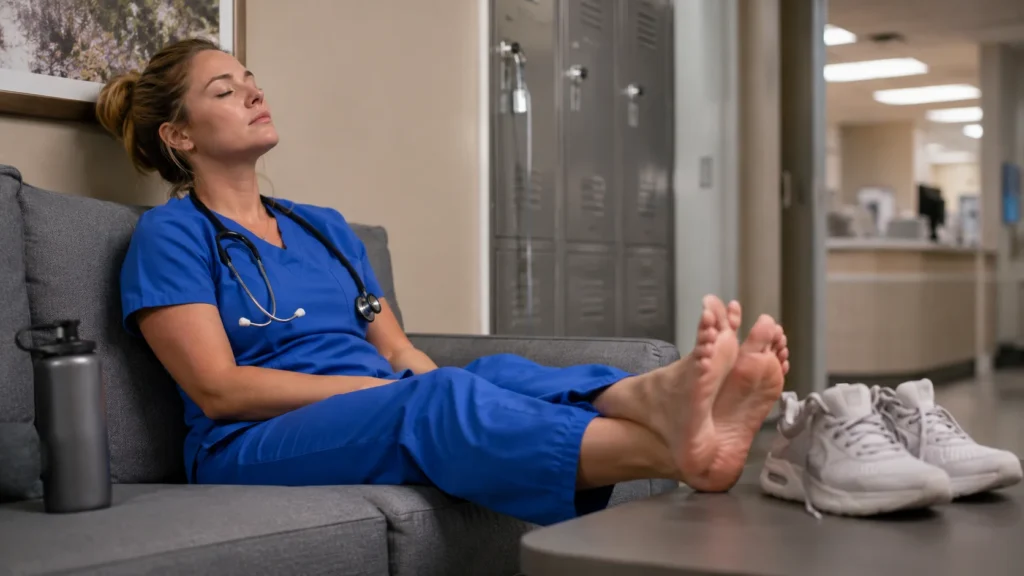
You finish a 12-hour shift, finally sit down, pull off your shoes, and your feet feel like they are on fire. If that sounds familiar, you are not imagining it, and you are not alone. Burning feet at the end of a long shift is a common complaint among nurses, nursing students on clinical rotations, and anyone who spends most of the workday upright on hard hospital floors.
This article will not diagnose you, and it will not promise that one pair of shoes will make the burning disappear. It explains everyday reasons feet may burn after long standing shifts, points out which factors are actually in your control, including your footwear, and helps you recognize signs that are worth discussing with a qualified professional rather than trying to solve with new shoes alone.
Quick Answer: Why Do Your Feet Burn After a 12-Hour Shift?
- End-of-shift burning is common. Long hours of mostly standing, not only walking, can fatigue the small muscles in your feet and make your lower legs feel heavy, hot, achy, or tight.
- Your setup matters. Shoe fit, cushioning, breathability, socks, and the floor you stand on can all make the burning feel better or worse.
- Shoes are one lever, not a cure. The right footwear may help reduce discomfort and fatigue for some people, but it will not fix every cause of burning feet on its own.
- Some burning is a signal, not just fatigue. Burning that lingers at rest or at night, comes with numbness, tingling, swelling, skin changes, or affects one foot more than the other is worth getting checked by a doctor or podiatrist.
- Small habits can help too. Moving when you can, changing damp socks, hydrating, and elevating your feet after a shift may all take the edge off.
What 12 Hours of Standing Actually Does to Your Feet
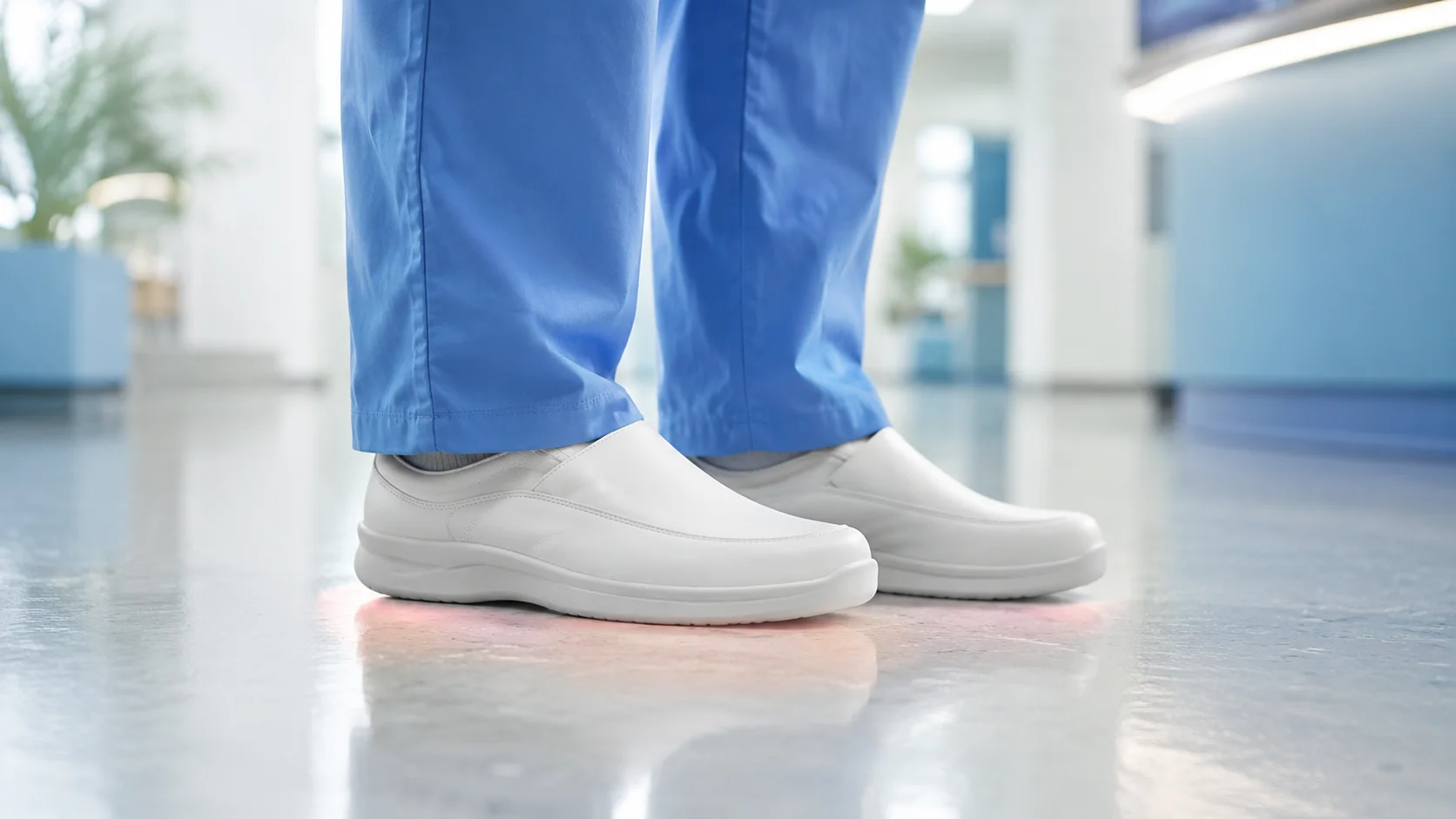
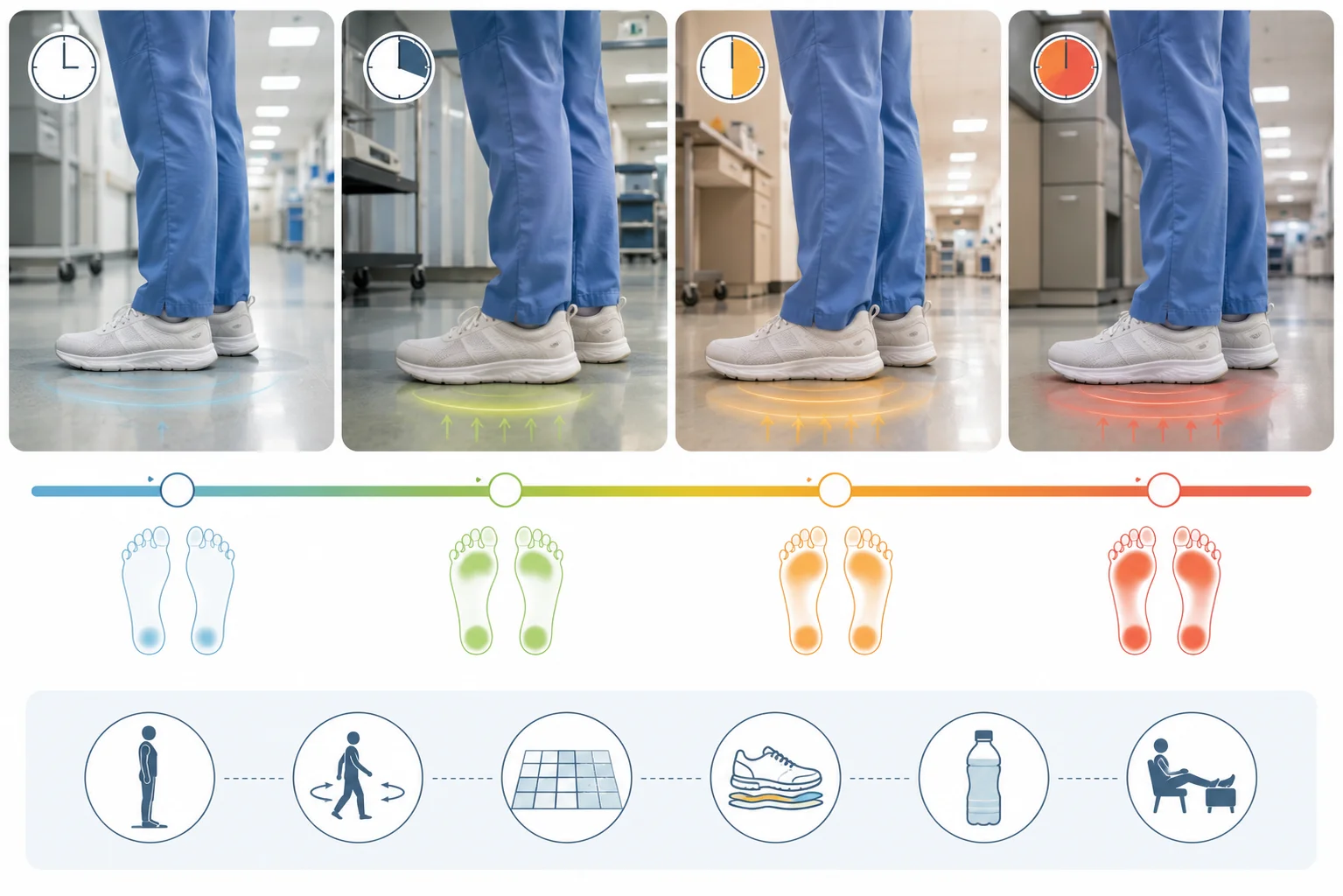
Standing feels passive, but your feet are working the entire time. When you stand still, the muscles in your feet and lower legs stay quietly active to help keep you balanced. Unlike walking, which lets those muscles contract and relax in a rhythm, long static standing keeps them under steady load with very little break.
That steady load matters because movement helps push blood back from your legs. Workplace safety sources describe prolonged standing as a contributor to fatigue and lower-leg discomfort, partly because staying in one position reduces healthy movement and keeps the same muscles working for a long stretch. Over a 12-hour shift, that may show up as heaviness, swelling, aching, and a hot or burning feeling by the time you clock out.
There is also a mechanical side. Research on workers who stand for much of the day has observed that foot muscles can fatigue over a long shift, with small temporary changes in how the foot loads and distributes pressure. In plain terms, tired feet may not carry your weight quite the same way at hour 11 as they did at hour 1, and that pressure shift can add to discomfort.
None of this automatically means something is wrong with you. It can be the predictable result of asking your feet to do a hard job for a long time on an unforgiving surface.
The Footwear Factors You Can Actually Change
This is where you have real influence. Your shoes will not undo a 12-hour shift, but they can change how your feet feel during and after it. These are the factors worth checking.
Fit and Toe Room
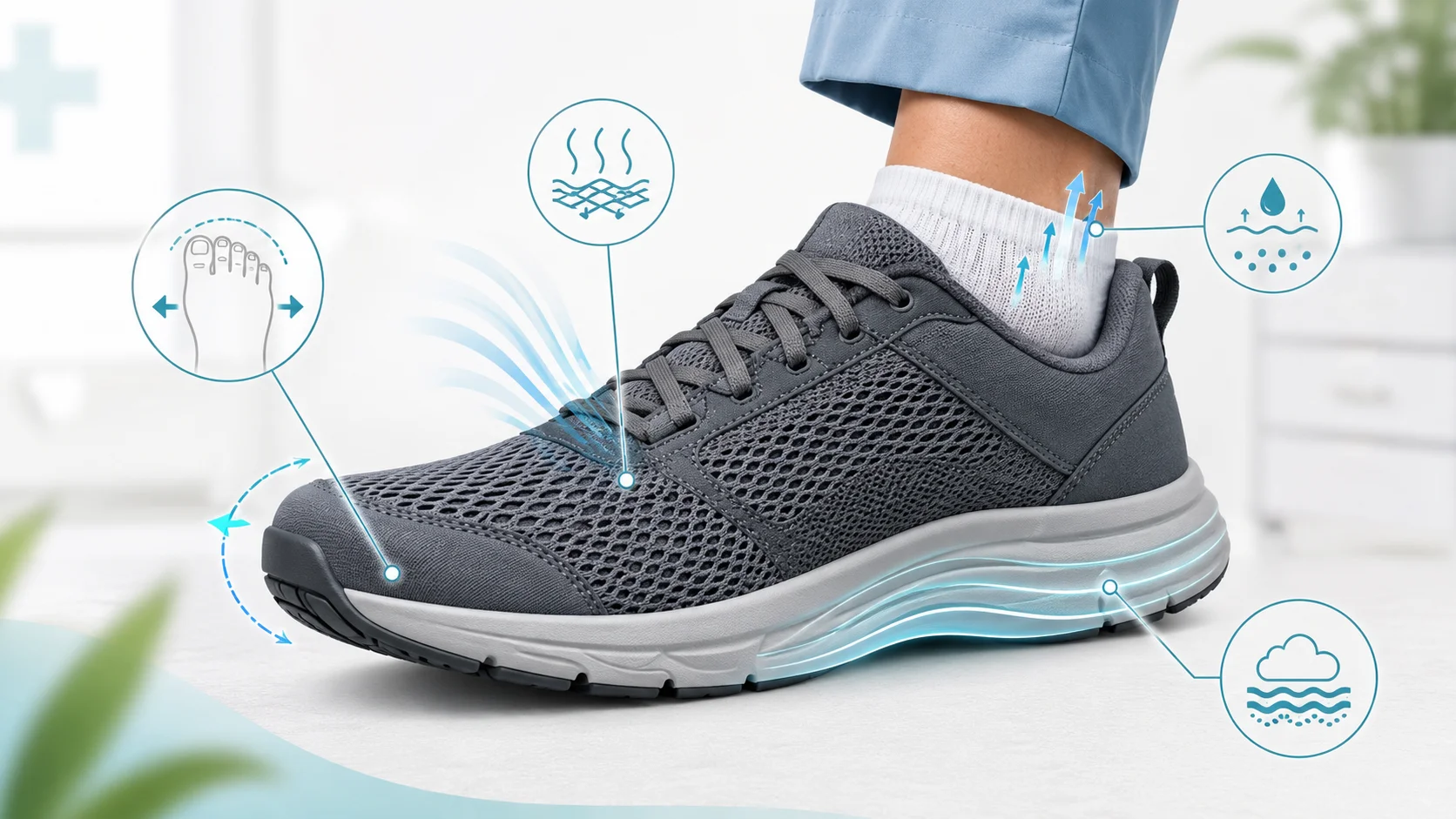
A shoe that is too tight squeezes your toes and increases friction and pressure, which is exactly what you do not want over a long shift. A shoe that is too loose lets your foot slide, which can also create rubbing and heat. Feet often feel fuller across a long day, so a shoe that feels perfect in the morning can feel tight by the evening. Check that you have a little wiggle room in the toes and a secure, not crushing, fit through the midfoot.
If you have wider feet, this is even more important. A shoe that is the right length but too narrow can feel like it is burning across the ball of your foot. For a deeper fit breakdown, read StandingSole’s guide to nursing shoes for wide feet.
Cushioning and Underfoot Support
Hard hospital and clinic floors give very little back. Cushioning under the foot is what stands between you and that surface for hours at a time. Some nurses may prefer a softer, plush feel. Others find too much softness unstable on a long shift and prefer firmer, more supportive cushioning. Neither choice is automatically correct. The goal is to choose what helps your feet feel less fatigued at the end of the day. Cushioning is for comfort and reducing that worn-out feeling, not for treating a medical condition.
Breathability and Moisture
Heat and sweat can make burning feel worse. A shoe with a breathable upper helps air move and can keep feet drier and cooler over a long shift. This matters for comfort, and there is a practical hygiene angle too. Warm, damp shoes can create an environment where fungal issues such as athlete’s foot may be more likely, and those issues can cause burning or itching. Keeping feet drier is simply good practice.
Socks
Socks are easy to overlook. Thick, seamed, or moisture-trapping socks can add friction and heat. Moisture-wicking socks with flat seams may feel noticeably better by hour 12. Many nurses keep a spare pair in their bag to swap mid-shift, which is a small change that can reset how your feet feel for the back half of the day.
| Footwear Factor | Why It Matters on a Long Shift |
|---|---|
| Fit and toe room | Reduces friction and pressure, and leaves room for feet that may feel fuller later in the day. |
| Cushioning | Buffers hard floors and may lower that end-of-shift worn-out feeling. |
| Support | Helps tired feet feel more stable late in the shift. |
| Breathability | Helps feet feel cooler and drier, and supports basic foot hygiene. |
| Socks | Can reduce friction and manage moisture, and they are easy to swap mid-shift. |
The Non-Shoe Factors, Because Shoes Are Not the Whole Story
If an article only talks about shoes, it is not being honest with you. Several important factors have nothing to do with what is on your feet.
- The floor. Hard surfaces are tough on feet. Where it is allowed and practical, anti-fatigue mats at a station may reduce strain on the feet and legs. Workplace safety guidance specifically points to them as a simple help for people who stand a lot.
- Movement and weight shifting. Even small position changes help. Shifting your weight, taking micro-breaks, or briefly using a footrest to rest one leg at a time can ease the constant static load.
- Hydration. Long shifts make it easy to forget water. Staying hydrated supports your whole body through a demanding day.
- After-shift recovery. Elevating your feet when you get home is one of the simplest ways to feel relief because it helps fluid move away from tired lower legs.
These habits will not show up on a product page, but they are often as important as the shoes, and they are free.
When Burning Feet Is More Than Tired Feet
Most end-of-shift burning is ordinary fatigue. But burning feet can also be a symptom worth taking seriously, and footwear is not the answer for that kind. Reputable health sources note that a burning sensation in the feet can be linked to nerve-related or circulation-related issues, among other causes. That is why persistent or unusual burning is a conversation for a qualified professional, not a shoe review.
This is not about alarming you. It is about not ignoring a signal. A professional can look at the whole picture in a way that no shoe and no article can. For persistent pain or unusual symptoms, ask a qualified professional.
What to Look For in a Shoe for Long Shifts
If you have worked through the sections above and your shoes feel like part of the problem, use this shopping checklist. This is about decision factors, not a single miracle model.
What to check before buying:
- Fit and width: Look for room for your toes, a secure midfoot fit, and a little allowance for end-of-day fullness.
- Cushioning that suits you: Plush versus firm is personal. Match it to how your feet feel late in a shift.
- Breathable upper: This helps with heat and moisture over long hours.
- Slip resistance: This is essential on many clinical floors. See the safety note below.
- Closed-toe and dress-code compliant design: Many clinical settings require this.
- Weight: Lighter shoes can feel less tiring, though it can be a trade-off with cushioning and support.
Choose Differently If
- You have wide feet. Prioritize true width and toe room over a snug, sporty fit. Read StandingSole’s guide to nursing shoes for wide feet.
- Your program or unit has strict shoe rules. Confirm color, material, toe coverage, heel coverage, and slip-resistance requirements first. StandingSole’s guide to white closed-toe clinical shoes for nursing students can help you know what to verify.
Common Mistakes to Avoid
- Buying for looks over fit and breathability.
- Sizing for your morning foot, not your end-of-shift foot.
- Assuming the most expensive or most-hyped shoe is automatically right for your foot.
- Expecting any shoe to fix burning that is actually a medical signal.
Before You Shop
If you are ready to compare options, use the checklist above first. Then browse StandingSole’s nursing shoe guides so you can match real decision factors, including fit, cushioning, breathability, and slip resistance, rather than reacting to marketing.
No shoe is a guaranteed fix, and we do not pretend otherwise. The goal is to help you choose footwear that fits your feet, your floors, and your dress code, and to combine that choice with the simple habits above.
A Quick Safety Note
- Persistent, severe, sudden, or unusual foot pain should be discussed with a qualified professional rather than self-managed with footwear alone.
- Clinical and workplace shoe rules vary. Always confirm requirements with your nursing program or employer before buying.
- Slip-resistant shoes can reduce slip risk on wet clinical floors, but they do not guarantee that you will not slip. Care and attention still matter.
Frequently Asked Questions
Is it normal for my feet to burn after a 12-hour shift?
For many people, yes. Long hours of standing on hard floors can leave feet feeling hot, achy, and tired. That said, burning that lingers at rest, comes with numbness or swelling, or keeps getting worse is worth having checked by a professional.
Why do my feet burn even when I am just standing, not walking?
Standing still keeps the same foot and leg muscles working continuously, with less of the movement that normally helps blood flow back up your legs. That sustained static load is part of why standing can feel harder on your feet than walking.
Can the wrong shoes make my feet burn more?
They can contribute. Shoes that are too tight, too loose, poorly cushioned for the floors you work on, or not breathable can add friction, pressure, and heat. All of those factors can make end-of-shift burning feel worse.
Do anti-fatigue mats actually help?
Workplace safety guidance points to anti-fatigue mats as one way to reduce strain for people who stand for long periods. Where they are allowed and practical at your station, they may be worth asking about.
What can I do during my shift to make my feet feel better?
Small things add up. Shift your weight and move when you can, take micro-breaks, keep hydrated, and consider swapping to fresh moisture-wicking socks partway through a long shift.
Will more cushioned shoes stop the burning?
More cushioning may help reduce discomfort and fatigue for some people, but it is not a guaranteed fix. Cushioning preference is personal, and some nurses prefer firmer support. It is one factor among several, not a cure.
When should I see a doctor about burning feet?
If the burning persists at rest or at night, spreads, comes with numbness, tingling, swelling, redness, sores, or skin changes, or affects one foot more than the other, it is worth getting checked. A professional can assess causes that footwear cannot address.
Are slip-resistant nursing shoes also comfortable for long shifts?
Many slip-resistant shoes are also designed with cushioning and support in mind, but slip resistance and comfort are separate features. Check both. Slip resistance is often required on clinical floors, so confirm your program or employer’s rules before buying. StandingSole’s guide to white closed-toe clinical shoes for nursing students explains common clinical shoe requirements to verify.
Sources Consulted
This article was prepared by reviewing workplace-safety guidance, prolonged-standing research, and reputable health resources for general context. This article is not medical advice and does not diagnose or treat any condition.
U.S. Occupational Safety and Health Administration (OSHA)
Reviewed for workplace ergonomics context related to prolonged standing, anti-fatigue mats, and standing workstation guidance.
- OSHA: Hospitals eTool, Work-related Musculoskeletal Disorders
- OSHA: Food Services, Work-related Musculoskeletal Disorders
European Agency for Safety and Health at Work (EU-OSHA)
Reviewed for prolonged static standing, musculoskeletal-disorder context, and footwear considerations for standing work.
- OSHwiki: Musculoskeletal Disorders and Prolonged Static Standing
- EU-OSHA: Prolonged Constrained Standing at Work
Peer-reviewed Biomechanics Research
Reviewed for foot and postural changes observed during a prolonged standing workday.
General Health Context
Reviewed for non-diagnostic context on burning feet and signs that may require professional evaluation.