

Affiliate Disclosure: StandingSole may earn a commission from qualifying purchases made through links on this page, at no extra cost to you. This does not affect our editorial guidance.
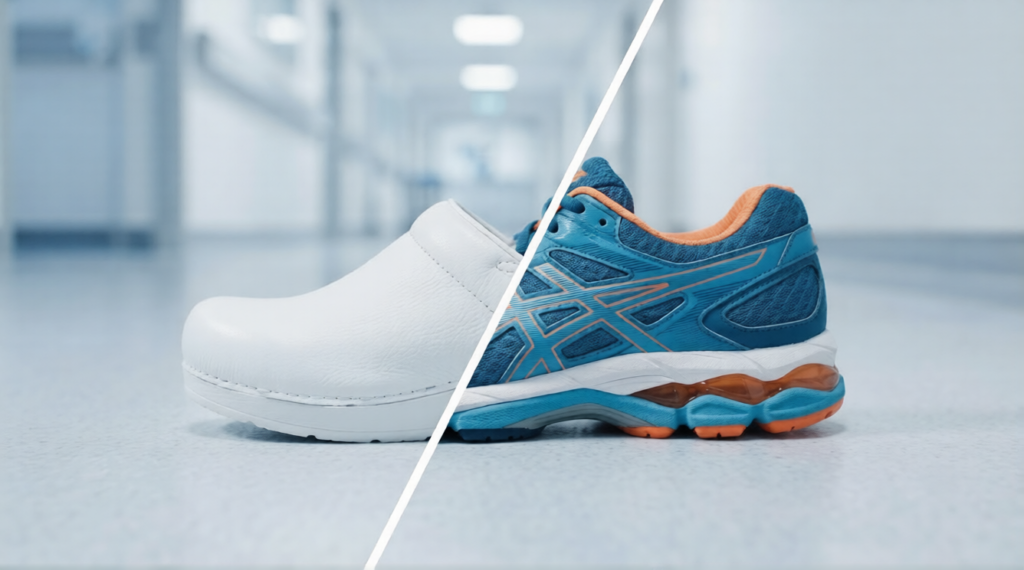
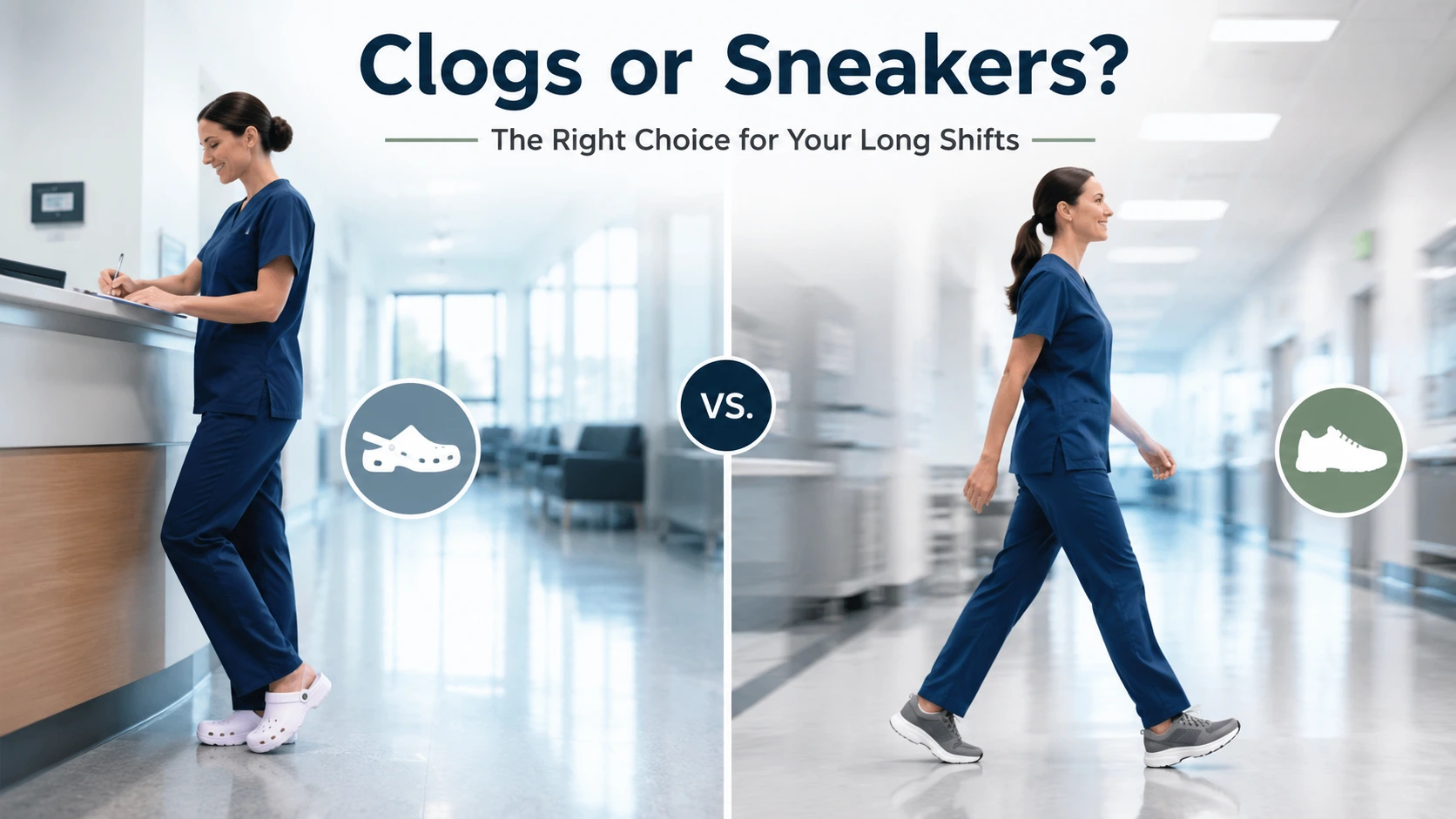
Choosing between clogs and sneakers usually comes down to how you move during a shift. Occupational clogs feature a rigid, molded base built for professionals who stand in place for hours. Athletic sneakers utilize soft, flexible cushioning designed for workers who cover significant ground rapidly. Evaluating your actual workday helps determine the ideal footwear style.
This article provides general comfort and fit guidance and does not constitute medical advice. Individuals experiencing ongoing foot or back pain should consult a podiatrist for personalized evaluations.
Quick Action Summary
- Choose clogs if: You stand in one spot for hours, encounter fluid spills or splashes, or find firmer, more structured footwear comfortable.
- Choose sneakers if: You walk several miles per shift, need to move quickly, or wear custom orthotics requiring removable insoles.
- Popular brands in this category: Dansko, Sanita, Hoka, and Brooks.
1. Clogs vs. Sneakers at a Glance
| Evaluation Criteria | Occupational Clogs | Athletic Sneakers |
|---|---|---|
| Typical Lifespan | Longer, with proper care | Shorter under heavy daily use |
| Fluid Resistance | Highly fluid-resistant (sealed leather/rubber) | Low—mesh absorbs liquids |
| Cleaning | Wipe down or sanitize | Machine wash, air dry |
| Break-in Period | Usually longer (rigid sole) | Usually minimal |
| Orthotic-Friendly | Varies by brand—check the footbed | Generally yes, removable insoles common |
2. Structural Differences
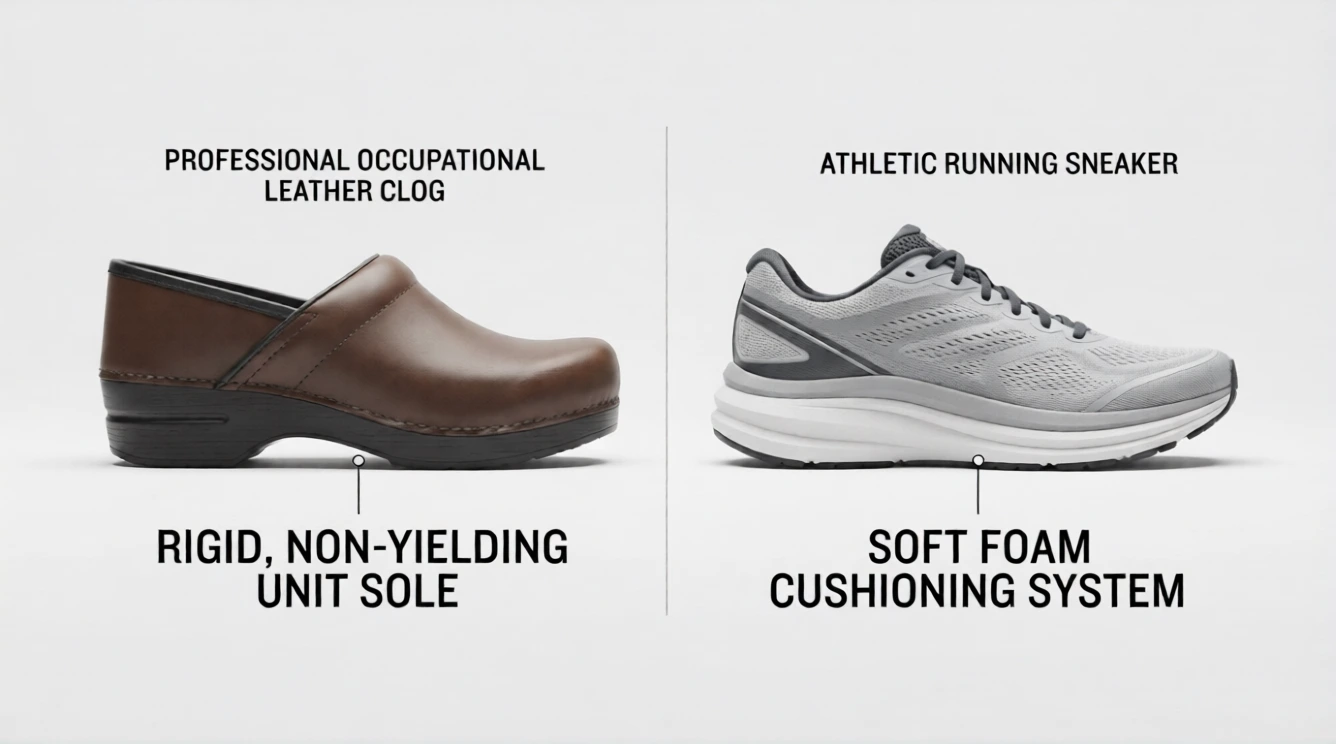
Occupational clogs rely on a stiff, non-yielding sole and a molded shape to maintain a fixed foot position. This rigidity minimizes arch collapse during prolonged static standing.
Athletic sneakers incorporate soft foam midsoles (often EVA) to absorb impact with every step, paired with flexible outsoles that accommodate natural foot bending during fast, repetitive movement.
3. When Clogs Make Sense
Clogs suit environments involving prolonged static standing or splash risks, such as operating rooms, commercial kitchens, and salons.
- Firm support: Rigid footbeds reduce arch strain associated with long periods of standing in one place.
- Liquid protection: Sealed uppers block spills, splashes, and debris more effectively than mesh sneakers.
- Durability: Premium construction allows well-made clogs to outlast sneakers under daily occupational wear, offsetting higher upfront costs over time.
4. When Sneakers Make Sense
Sneakers excel in roles requiring rapid movement, heavy walking, or lifting, frequently utilized in emergency departments, warehouses, and physical therapy settings.
- Minimal break-in: Sneakers are ready to wear immediately while cushioning joints against hard floors.
- Secure fit: Lace-up designs secure the heel more reliably than slip-on clogs, which is essential for rapid movement.
- Orthotic-friendly: Removable insoles simplify the integration of custom orthotics.
5. Common Fitting Mistakes
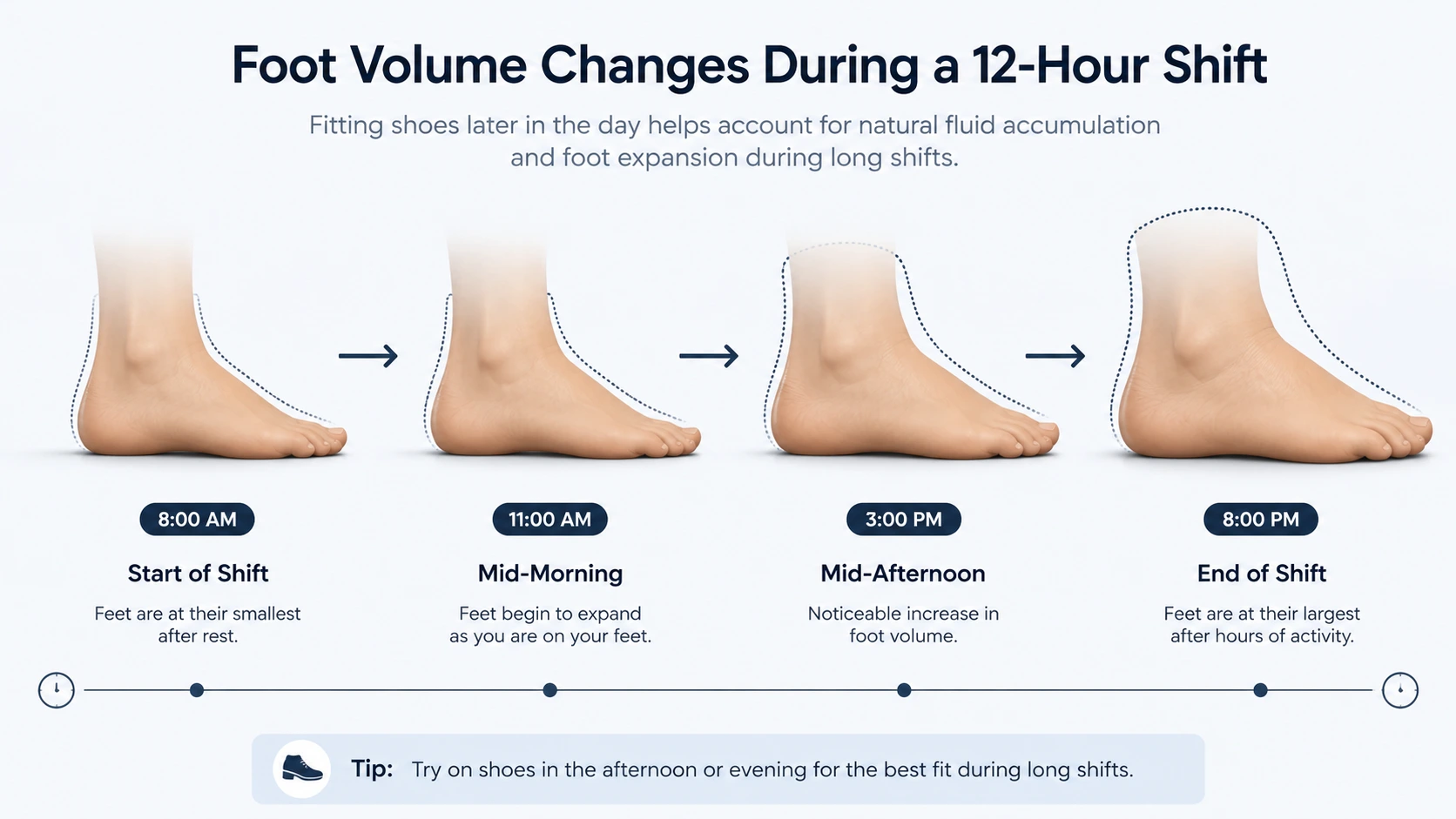
Purchasing tight footwear creates significant discomfort once feet naturally swell during a long shift, potentially causing blisters and friction.
- Clog heel fit: Moderate heel lift is normal in clog designs to prevent chafing. If movement presents a trip hazard, consider sizing down or selecting a style with a heel strap.
- Shop late in the day: Try on work shoes during the afternoon or evening when feet reach their maximum volume.
- Watch for worn-out cushioning: Sneakers that appear intact externally may feature compressed internal foam, diminishing support invisibly.
6. How to Transition Safely
Ease into new occupational footwear gradually rather than wearing them for an entire shift immediately.
- Break them in at home: Wear new shoes around the house for an hour or two on a day off.
- Bring a backup pair: Wear the new shoes for part of a shift before switching to your previous pair.
- Build up gradually: Increase wear time incrementally across subsequent shifts until full comfort is achieved.
7. When to See a Podiatrist
Experiencing sharp heel pain during initial morning steps, toe numbness, or tingling warrants professional evaluation. These symptoms can indicate conditions such as plantar fasciitis or nerve-related issues requiring clinical diagnosis. Footwear choices aid comfort management but cannot replace formal medical evaluation for persistent pain.
Frequently Asked Questions
Do clogs or sneakers work better if I have plantar fasciitis?
Experiences vary by individual. Some individuals with plantar fasciitis prefer firm, structured clogs because they limit excessive arch flexing, while others find supportive sneakers effective. Consulting a podiatrist helps determine the specific shoe type and support level suited to your feet.
How often should I replace my work sneakers?
Replacement timelines depend on walking volume and comfort levels. A reliable rule of thumb: if outsoles appear undamaged but feet feel unusually fatigued by the end of a shift, internal cushioning has likely degraded despite a normal exterior appearance.
Can I wash leather clogs in a washing machine?
No, water damages leather. Clean leather clogs using disinfectant wipes or a damp cloth with mild soap.
Why does my heel slip out of my new clogs?
Heel movement is an intentional design feature in open-back clogs to facilitate easy entry and exit. Excessive or insecure movement indicates a need for a smaller size or a style equipped with a heel strap.
Are mesh sneakers safe for hospital or kitchen work?
Mesh uppers permit liquids and debris to penetrate more easily than sealed leather or rubber, prompting many clinical and kitchen employers to mandate closed, non-mesh footwear. Review workplace dress codes prior to selecting footwear for these environments.